BuzzFeed Revenue rises by more than 50 percent

BuzzFeed CEO Jonah Peretti, Image Via The Wall Street Journal

On Thursday, for the first time since announcing plans to go public, BuzzFeed reported quarterly earnings. They reported that its revenue rose by more than 50 percent in Q2 of 2021, reflecting improvements in advertising as the economy emerged from the COVID-19 pandemic. In Q2, advertising revenue was up 79 percent to $47.8 million and Content revenue was up 5 percent to $24.2 million. As consumer spending improved, the company attributed some of the growth to its e-commerce business too, which generates revenue by recommending and selling products online. Ecommerce and other revenue rose by 82 percent to $17.1 million.

“Our data-informed approach to content creation and capital allocation allows us to capitalize on secular trends in advertising and commerce and helped fuel our significant topline growth in the first half of the year.”

BuzzFeed CEO Jonah Peretti

These reports are important, as BuzzFeed will be the first of digital media giants to go public. As the company announced in June, it reached a deal to merge with 890 Fifth Avenue Partners Inc. and is going to acquire Complex Networks. BuzzFeed CEO Peretti explains: “This impressive performance in the year to date lays the foundation for what we expect to be an exciting second half, with the anticipated closing of the acquisition of Complex Networks and our simultaneous emergence as a public company.” Their valuation of the combined company at $1.5 billion serves as a sticking point for other digital media firms looking to go public, for instance Vice Media, Group Nine Media, or Vox Media.

https://www.hollywoodreporter.com/business/digital/buzzfeed-q2-2021-earnings-1235010437/

Apple acquires Classical Streaming Service Primephonic

Image Via Apple

Apple has bought the classical music streaming service Primephonic. The company announced in a release on August 30, by the acquisition “Apple Music Classical fans will get a dedicated experience with the best features of Primephonic, including better browsing and search capabilities by composer and by repertoire, detailed displays of classical music metadata, plus new features and benefits”. The acquisition adds more than 75 million songs to Apple Music’s library and Apple is planning to use Primephonic’s data about classical track to improve search capabilities and browsing. Moreover, Apple announced plans to launch a music app next year, which mainly focused on classical music and combines Primephonic’s classical user interface with more added features.  Primephonic said in a statement posted on Monday that in order to reach more classical music listeners worldwide they need to partner with a leading streaming service. The major shareholder of Primephonic Gordon P. Getty concludes “Primephonic and Apple together can realize that mission and take classical to a worldwide audience”. The acquisition is going to help serving classical music especially to those listeners, who listen to other music genres as well.

Primephonic is no longer available for new subscribers and will be taken offline beginning September 7. Current subscribers of Primephonic will receive six months of Apple Music for free.

In my opinion, the acquisition is an important step for Apple to expand its monopoly position in Media. In the last years, Apple acquired dozens of companies to improve expertise in particular areas. In the music area, some of the largest and highest profile acquisitions have been music service Beats for $3 billion in 2014 or Shazam, the music-identification service in 2017. By adding and promoting specific music genres, the company presents Apple Music as a multifaceted service, where every user can enjoy their unique taste in music. Moreover, with the addition of classical music, Apple tries to diversify their listeners, and convince the older audience in particular, to use Apple Music.

https://www.cnbc.com/2021/08/30/apple-buys-classical-music-streaming-service-primephonic.html

Netflix’s One Piece Adaptation Has its Logo Revealed

https://www.rappler.com/entertainment/series/netflix-unveils-logo-one-piece-live-action-adaptation

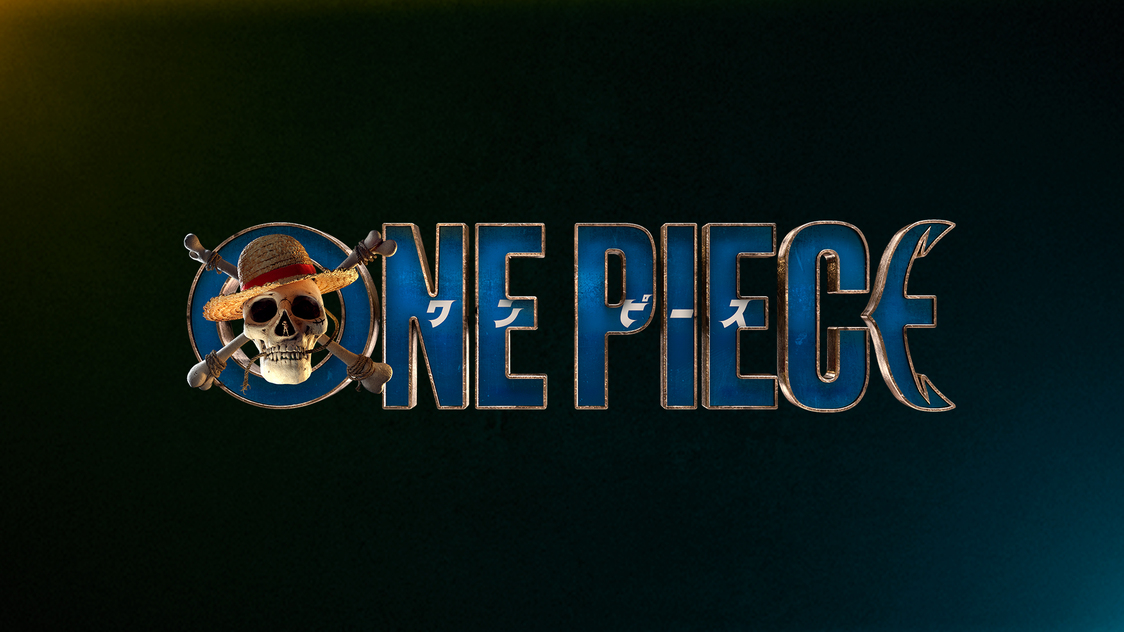
Last Friday the NetflixGeeked Twitter account posted twice pertaining to the upcoming live-action adaptation of the One Piece property. The former of the two posts revealing the official logo of the series and the latter being a picture of the front page of the first episode’s script. The official logo’s post was captioned “no matter how hard or how impossible it is, never lose sight of your goal”, a quote attributed to the series’s protagonist Monkey D. Luffy. The logo itself is a slightly altered reimagining of the manga’s logo. The key difference in said logo being that, where Luffy’s silhouette is the “i” in the manga’s logo in this one he instead assumes his iconic stance in the nose cavity of the skull present. Meanwhile, the script reveals the first episode’s working title to be “Romance Dawn”; this being a name it shares with both the first chapter/story arc of the manga as well as One Piece author Eiichiro Oda’s previous one-shot project that later itself became One Piece. One Piece is significant for being the best selling manga of all time, running for nearly 25 years, and having an excess of 950 anime episodes based on it. With this context it becomes obvious why Netflix would want to approach Oda to create a live-action adaptation. This adaptation was announced in 2020 and little has come out about it since. Fans are nothing if not skeptical seeing as the history of manga to live-action adaptations has been disastrous. Train wrecks the likes of Dragon Ball Evolution, Netflix’s Death Note adaptation, and the live-action attempt at a Full Metal Alchemist film have left fans of manga feeling hopeless. The fact that Eiichiro Oda is on as an executive producer for this project, fans hope, signals that this time will be different.

This article interests me because I’m a big fan of the One Piece manga. One Piece being a surreal dystopian super power-driven sci-fi fantasy epic I’m excited to see how the crew behind it is going to spend the purported 9-10 million dollar per episode budget. One Piece has already enraptured the world’s populous to such an extent that despite being a single creator run series it has more circulating copies than there are for Batman comics. If this adaptation takes off and launches One Piece into the American mainstream it could have game-changing implications for the future of media comparable to what the first Iron Man film did back in 2008.

Bulten, Izak. “Netflix Unveils Logo for Its Upcoming One Piece Series.” Game Rant, 7 Sept. 2021, gamerant.com/netflix-logo-one-piece-series/.

Valentine, Evan. “One Piece Sales Might Have Just OVERTAKEN Batman at Last.” Anime, Comicbook.com, 21 July 2021, comicbook.com/anime/news/one-piece-sales-overtake-batman-dc-comics/.

Tseros, Peter. “One Piece’s LIVE-ACTION Tv Show Will Cost a Lot of Money.” Anime, Comicbook.com, 5 Sept. 2017, comicbook.com/anime/news/-one-pieces-live-action-tv-show-will-cost-a-lot-of-money/.

China’s Weird War on Kid’s Playing Video Games

(https://www.foxbusiness.com/markets/coronavirus-spike-china-video-game, Frank Connor)

China’s national video game regulator The National Press and Publication Administration announced this past Monday that they’ll be banning children from playing video games Monday through Thursday and further limiting them to four hours of playtime on Fridays, weekends, and holidays. This policy went into effect last Wednesday. This regulation comes as a result of the Chinese government’s blaming video games for causing nearsightedness and addiction in youths. This is also not the first time China has restricted children’s ability to play video games as, in 2019, they banned the playing of video games by minors between the hours of 10 p.m and 8 a.m and restricted the amount of time children could play video games during weekdays to 90 minutes. The Chinese government intends to enforce the new playtime restrictions by way of requiring minors to register games under their real names and requiring video game companies to implement software that asks for said real names. China’s government has also expressed animosity towards video game publishers in the past. One such example being their 2018 nearly nine-month-long prohibition on the approval of video games. This being incentive for video game creators to implemented the aforementioned software. Some game companies like Tencent have already begun asking for user’s real names. Children can notably circumvent the software that’d restrict their playing games by simply using the gaming accounts of adults. It is for this reason that the Chinese government asks for family cooperation. The Chinese government has been implementing ways to prevent video game addiction in youth since 2018. Despite this, the government has also promoted e-sports and cloud gaming the former of the two incentivizing a video game training regimen that begins at a young age. China’s youths are also banned from spending more than 400 yuan (about $62) a month on games. Last week South Korea announced it would get rid of similar regulations that saw people under 16 banned from playing video games between midnight and 6 a.m. Console gaming in China was banned for more than a decade leading up to 2015. This led the Chinese populous to gravitate towards PC and mobile gaming. Companies like Nintendo and Sony are attempting to introduce their consoles into the market but are still experiencing “minuscule” sales because of this.

This article interests me because, while I was aware that the Chinese government was oppressive I didn’t know that they had and were reinforcing a stance on the hours during which children could play video games. Beyond that I think it’s interesting that a government as oppressive as China’s still can’t get around the fact that people can just use other people’s accounts to get around the playtime hours they’re trying to enforce. I also find it odd that the government is pro-e-sports; almost as if they expect and are promoting this illegal practice.

Liao, Shannon. “China Restricts Young People to Playing Video Games Three Hours a Week.” Spokesman.com, The Spokesman-Review, 3 Sept. 2021, http://www.spokesman.com/stories/2021/sep/05/china-restricts-young-people-to-playing-video-game/.

New Social Media Restrictions for Children: Britain’s attempt to pave the way for a safer internet

(www.sheknows.com/parenting/articles/2036128/apple-removes-parental-control-apps/.,
kaspars Grinvalds/Shutterstock.)

This past Thursday Britain introduced a set of regulations designed to protect children online. Overnight platforms the likes of TikTok, Instagram, and Youtube have responded by doing just that threatened by the possibility of having to pay multimillion-dollar fines. Rather than applying the new mandatory “age-appropriate design code” specifically to the UK, the aforementioned social media platforms have opted to change internationally to meet this new standard. This meaningful change to the online landscape as brought on by the mid-sized country of Britain potentially signals a positive change for the global internet. This, in the way that it implies that the tech industry is no longer all but exempt from broader regulation. oddly enough this major online regulatory step was met with little attention despite the UK’s stated goal of becoming the “safest place in the world to be online”. The code in question was introduced as an amendment to the data protection act 2018, a technical piece of legislation intended mostly to implement GDPR into UK law. The code in question applies to all online services that are used by children and require that said services at least identify younger users and treat them with care. The code prohibits several predatory practices including. One, “nudge” techniques that encourage children to divulge more of their private information than is necessary. Two, anything considered to be more than the minimization of data harvesting from children. And Three, giving anything less than the maximum amount of security for children’s accounts. Where adamant lobbying opposing these regulations was expected the world’s largest companies have instead made substantial changes and, what’s more, insisted that they wanted to make this manner of change to their platforms all along. Whatever the next step is is controlled by the Information Commissioner’s Office or “ICO” as this party controls when and whether to enforce fines for breaches of this regulation. A major factor that is still up in the air is whether or not children will accept their being treated differently online or if they’ll just use their tech-savvy to skirt around regulation. Regardless of what it is children decide to do it is pivotal that the internet is acknowledged as curating the experience of childhood as we move further into the digital age.

This article interests me for the reason that it pertains to what I perceive to be positive broader internet regulation. This is because such change is rarely if ever properly enforced or implemented at all despite its growing importance. This article also interests me because of the broader implications of the implementation of software that is restrictive to children in an age where children are increasingly tech-savvy. This is to say that I think it’ll be interesting to see how children react to being given the power to restrict their own activity on the internet with the context that it’s “for their own good”.

Hern, Alex. “Social Media Giants Increase Global Child Safety after UK Regulations Introduced.” The Guardian, Guardian News and Media, 5 Sept. 2021, http://www.theguardian.com/media/2021/sep/05/social-media-giants-increase-global-child-safety-after-uk-regulations-introduced.

Marvel Studios ‘Shang-Chi’ Breaks Labor Day Box Office records with $71.4M Debut

Marvel Studio’s ‘Shang Chi and the Legend of the Ten Rings’ https://nerdist.com/article/shang-chi-legend-of-the-ten-rings-review-marvel-disney/

by Troy Pittman

During the three-day Labor Day weekend, Marvel film 'Shang-Chi and the Legend of the Ten Rings' broke the record for Labor Day theater debut with an estimated $71.4 million in ticket sales. Marvel's first film with an Asian superhero lead ranks among the best debut's since the pandemic. After suffering from COVID-19 financial setbacks, box offices are seeing a bright future for the movie theater industry this fall. Disney Studios are projecting 'Shang Chi' to gross about $150 million, aside from the estimated $12.1 million projection for Monday's ticket sales.

According to the Walt Disney Co., ‘Shang Chi’ will have a 45-day run in theaters before its release on the streaming platform Disney+. The theatrical movie industry couldn’t be more proud of ‘Shang Chi’s due to its theatrical strategy, similar to Marvel’s ‘Spider-Man: Far From Home’ film. With the film’s earnings being $20 million over its initial projection, Hollywood is relieved. Several upcoming Paramount Picture films: “Top Gun: Maverick”, “Jackass Forever”, and live-action “Clifford The Big Red Dog”, have been postponed.

“We are the underdog; the underestimated. We are the ceiling-breakers. We are the celebration of culture and joy that will preserve after an embattled year”.

https://www.latimes.com/entertainment-arts/movies/story/2021-09-02/shang-chi-simu-liu-marvel-asian-hero

Actor Simu Liu

Simu Liu https://www.msn.com/en-us/movies/news/shang-chi-blasts-labor-day-records-with-71-4m-debut/ar-AAO7PBb?ocid=msedgntp

GameStop Won’t Stop:The Stock Market Enigma with a Reddit Based Cult Following

Cohen, R. (2021, July 20). Pg-13 pic.twitter.com/b2hraf1yfr. Twitter. https://twitter.com/ryancohen/status/1417315406272864258.
u/shadowman48ped. (2021, June 25). r/Superstonk – just a reminder for apes going into Monday after a crazy weekend. reddit. https://www.reddit.com/r/Superstonk/comments/omy6t7/just_a_reminder_for_apes_going_into_monday_after/.

The original “Meme Stock” GameStop (NYSE: GME) has been experiencing price fluctuations since early 2021 that have consistently baffled experts. Hot off the heels of having increased a slight excess of 30% in price on August 23rd 1.59 million dollars worth of GameStop calls were purchased in expectation for its price going even higher. GameStop’s price movement is attributed to the massive following the stock has gained as a short squeeze target on social media platforms such as Reddit. This attention has notably been welcomed by GameStop’s new Chairmen Ryan Cohen who has consistently tweeted out cryptic pictures, gifs, and videos that correlate with GameStop’s positive price progression, each of which has received hundreds to thousands of likes. As of late May, short-sellers had lost 6.7 billion dollars because of their betting against GameStop. Despite GameStop’s current apparent price ceiling at 300 dollars, it’s not unreasonable to assume that it could permanently blast past it before year’s end. Still, some are waiting for GameStop to plummet back to earth sighting the fact that they don’t believe the company’s stock price should be at 200 dollars given its negative per-share earnings profile. However, people with this stance have not done well historically and it is generally advised not to bet against GameStop right now.

I’ve been following what has come to be known as the “GameStop Saga” since mid-April through the multiple GameStop related subreddits including SuperStonk, DDintoGME, and GMEjungle. As of writing this the most prominent subreddit, Superstonk has 599,402 individual users a relatively small number of whom post “dd” or “due diligence” regarding progression to an event called the “Moass” or “Mother of All Short Squeezes”. During the Moass it is believed within these circles that the price of GameStop’s stock will rise to previously unthinkable highs driven by a myriad of factors that have yet to be acknowledged in the mainstream. The belief in the Moass has notably been spurred on by Ryan Cohen in his aforementioned cryptic tweets. These tweets being promptly decoded by the Reddit community immediately after their being posted. Linked below is a brief overview of the circumstances that are leading people to believe the Moass is inevitable. I have to note that none of this is financial advice.

September 1, 2021 David Moadel, et al. “It’s Time to Face the Truth — Gamestop Stock Is Unstoppable.” InvestorPlace, 1 Sept. 2021, investorplace.com/2021/09/time-to-face-the-truth-gme-stock-is-unstoppable-gamestop

u/Doom_Douche. (2021, April 27). r/Superstonk – why the “dumb money” is still betting on GameStop. reddit. https://www.reddit.com/r/Superstonk/comments/nkqai5/why_the_dumb_money_is_still_betting_on_gamestop/?utm_source=share&utm_medium=ios_app&utm_name=iossmf.

How the major TV networks reported Hurricane Ida: Very few mentions of Climate Change

Image Via Bruce Warren

According to a recent 96 hour survey of coverage of Hurricane Ida by major TV news outlets by Media Matters, only 4% of the coverage connected the storm to climate change. The survey, conducted from August 27-30, analyzed 774 TV segments.

The key findings of the analysis included:

  • Corporate broadcast TV outlets — ABC, CBS, and NBC — aired a combined 93 segments about Hurricane Ida during morning and evening news programs from August 27-30. Only 5 of these broadcast news segments referenced climate change.
  • Of the 5 climate mentions, ABC had 3 mentions, while CBS and NBC contributed one each.
  • Cable TV news outlets — CNN, Fox News, and MSNBC — aired a combined 681 segments about Hurricane Ida during all original programming from August 27-30. Only 4% (29) of cable news segments referenced climate change during their Ida coverage.
  • Of the 29 climate mentions, CNN had 5 mentions, Fox News mentioned climate twice, and MSNBC had the most out of all networks with 22.

Media Matters’ position on this coverage is that “the failure to communicate the connection to the climate crisis is media malpractice.” Additionally, the survey analysis also noted that “TV News rooms with a few notable exceptions did not report on Ida through a justice lens.” “The fact that poor communities and communities of color bear the brunt of the climate crisis is chronically undercovered by TV news, particularly in moments when those impacts are most stark,” they write.

Journalists are beginning to cover the impact of extreme weather events beyond the number of inches of water that has fallen in a storm or the strength of the wind during a hurricane. “Good journalism is grounded in science,” suggest Covering Climate Now, a collaboration of 460+ news and media partners “to produce more informed and urgent climate stories, to make climate a part of every beat in the newsroom — from politics and weather to business and culture — and to drive a public conversation that creates an engaged public.”

USA Today newsroom improving its diversity hiring

Image Via USA Today

USA TODAY, reported on September 1, that their newsroom is now majority female, and has sees gains in Black, Hispanic and Asian American journalists. In a recent staff survey about diversity and inclusion in the newsroom. The newspaper reports that “women were 51.7% of all journalists. We also made strides in the percentage of Black (13.6%), Hispanic (10.1%) and Asian American (7%) journalists. Overall, the newsroom was 34% journalists of color.”

According to USA TODAY, the survey did not currently include data on sexual orientation or gender identity. The paper said their “goal is to reflect the diversity of the U.S. by 2025; to be able to fully and accurately report the stories of our country,” they write, “we must reflect it.”

Much has been written, increasingly over the last couple of years, about the importance of diversity in the newsroom. It is one of the most important challenges and opportunities in media and journalism. In 2020, the Reuters Institute for the Study of Journalism surveyed newsroom leaders from 38 countries to gather insight into how the issues facing society are impacting the news coverage that is being served to the public.

The Reuters executive summary sets up the context for the research:

The year 2020 has meant deep disruption for journalism as the global COVID-19 pandemic has profoundly affected people’s health, habits, and livelihoods. Journalists play a central role in reporting on these changes even while simultaneously being personally affected by them. Lockdowns and safety restrictions have changed the way news is produced, with long hours and extensive remote working making communication and day-to-day production more complex. COVID-19 has also increased economic uncertainty after a steep decline in advertising revenues, leading to widespread layoffs and increased pressure on an already challenged industry.

At the same time, high-profile events have brought to the surface a series of social and generational changes and fundamental disagreements that are testing newsrooms in other ways. The killing of George Floyd in Minnesota and the Black Lives Matter protests have helped focus attention on racial injustice and social inequality and led to questions around the media’s coverage of these issues. Prompted also by the #MeToo movement, documented instances of sexual abuse and harassment in the media, and continued disclosure of gender pay gaps, newsrooms across the world have been wrestling with how to confront enduring forms of social inequality internally and how to better represent audiences through greater diversity in their news coverage.

Reuters Institute

Journalism and media outlets need more successful initiatives to invest in media makers of color. It’s essential that those who are reporting the stories and the history of our times are reflective of all the communities who are living those experiences.

Fashion Industry Suffering Creatively As Pandemic Grows?

I saw this article pop up on The Guardian and thought it was interesting. Many non-essential workers being laid off for an extended period of time, but have we considered the fashion industry when we’re thinking of who is affected by the pandemic? 

In this article, it talks about how the fashion industry in the UK has taken a toll on designers and models. They express the struggles they’re facing such as not being able to do photoshoots thus  “they can’t go live because the clothes can’t be photographed”.  Many designers are finding themselves with unsold stock or excess material, as well as overheads such as studio rent which can’t be paid. “The supply chain has stopped, so everything’s stopped,”. 

https://www.theguardian.com/fashion/2020/apr/08/economic-crisis-pandemic-could-spell-end-british-fashion