Female Journalists Facing More and More Online Harassment

https://www.cnn.com/2019/09/08/media/women-journalists-cpj-safety-survey-reliable-sources/index.html

Reading this article from CNN Business sadly did not surprise me too much. A new survey from the Committee to Protect Journalists confirmed that online harassment is in fact the biggest threat to mostly female and gender non-conforming reporters.

I think that this article highlights two very real facts about the society we live in today. 1. Women and minorities have always had to deal with harassment in the workplace, but 2. The harassment has never gone away, but instead evolved with the rest of the world around it- and it adapted to the technology around it. In a way, technology has made it much easier to receive hurtful messages. People can hide behind their screens and never encounter any sort of face-to-face confrontation, while spewing out hateful and inappropriate words. Online trolls are prominent in every social media platform and have made their way to chatrooms, and so much else.

This poses a threat to the field of journalism in general. If reporters feel that their work is causing these harmful words, perhaps they give in to what the people want and we see an agreeable reporter in which case- journalism is not doing what it was created to do.

Next In Line: the iPhone 11

Screenshot-2019-09-10-at-22.27.17-Edited

https://www.forbes.com/sites/gordonkelly/2019/09/10/apple-iphone-11-vs-iphone-11-pro-whats-the-difference-new-iphone-upgrade/#5f8e32226818

On Tuesday September 10th, Apple unveiled the new iPhone 11 among many other new products. During the press event, social media exploded with pictures, videos, and memes of the new iPhone. The new phone is set to have three different stages: iPhone 11, iPhone 11 Pro, and iPhone 11 Pro Max. The iPhone 11 starts at $699 and jumps up to $1099 for the iPhone 11 Pro Max. All three phones feature an updated camera system with the regular iPhone 11 consisting of two cameras and the iPhone 11 Pro and the iPhone 11 Pro Max consisting of three. The updated cameras come with “night mode” for low-light settings, front-facing slow motion video, and an upgraded 12 megapixel front facing lens. As stated before, the iPhone 11 Pro and the iPhone 11 Pro Max comes with a newly developed three camera system featuring an ultra wide, telephoto, and regular lens. On top of the new camera system, the iPhone 11 features a new A13 Bionic processor, new phone colors, and an increase in screen brightness.

Besides the iPhone 11, Apple announced a plethora of other new products. Among the new products is Apple’s new streaming service Apple TV Plus, the iPad 7, the Apple Watch Series 5, and Apple’s new gaming service Apple Arcade. In my opinion, I think a lot of these new products are pretty cool. I am excited to see Apple’s new streaming service, especially because it is said to be in direct competition with Disney’s new streaming service Disney+. It will be interesting to see what movies and television shows will be included in the streaming service. I am also pretty excited to see what Apple is going to do with Apple Arcade. It’s going to be hard to get a ton of people to switch/pay for their gaming service because of the already popular consoles like Xbox, Playstation, and the Nintendo Switch, however it will definitely be an easy sell for video game fanatics. It will be interesting to see the way Apple markets the product, how they develop it in the future, and how original/unique/addicting their games are. If they intend to have games like the new Mario Kart apart of the subscription, I will definitely pay the extra money to play. All in all, even though Apple didn’t release any news about a game-changing product, it is still a pretty cool update from the multinational technology company.

https://www.theverge.com/2019/9/10/20838905/apple-iphone-11-pro-max-event-news-summary-highlights-ipad-watch-tv-plus

https://www.thedailybeast.com/apple-debuts-new-iphone-11-and-the-iphone-11-pro

https://www.cnet.com/news/apple-iphone-11-pro-max-specs-vs-iphone-xr-xs-max-colors-specs-new-price-camera-storage-a13/

https://www.engadget.com/2019/09/11/apple-arcade-is-a-tough-sell/


The Decentralized Web

The ISIS flag next to symbols of Twitter and Facebook

Image source: https://101blockchains.com/web-3-0-examples/

In this digital age, internet in the U.S. is arguably a human right. It’s essential for everyday communication, networking, knowledge consumption, impulse buying, and navigation–among everything else us humans need.

But what about the rest of the world? It can be striking to think about what the internet means to people internationally. To some, it’s the only way to protest against a tyrannizing government. It’s a way for groups to come together, to console each other, to brainstorm a resistance, and to get the rest of the world to hear and listen to them.

Take Ethiopia for example. The country shut down the entire nation’s internet as a form of punishment due to rioting.

Source: https://www.reuters.com/article/us-ethiopia-internet/internet-in-eastern-ethiopia-shut-down-after-regional-violence-idUSKBN1KT0T4

Concurrently, in some developing countries, terrorist organizations use online platforms to promote radical ideology, strategy, and domination.Image result for isis propaganda

Image source: https://www.mic.com/articles/130993/the-real-enemy-is-the-isis-propaganda-machine-to-win-the-u-s-must-beat-it

This past December, mainstream operators Facebook, Twitter and Telegram cracked down on ISIS. The radicals specifically dominated Telegram with thousands of accounts, before they were all deleted.

ZeroNet logo

Related image

RocketChat logo

Now, ISIS turns to the “decentralized web” for their communication, with platforms such as RocketChat and ZeroNet. Since the developers of these platforms have “no way of acting against content that is stored on user-operated servers or dispersed across the user community”, ISIS is free to utilize these networks (“ISIS is using new social media sites,” Harley).

Image source: https://blog.computes.com/worlds-first-decentralized-web-app-%C3%B0app-powered-by-computes-b64bc5f91e47

The decentralized web is a hybrid way of using the internet that gives users the ability keep their date safe, without the risk of it being distributed to media corporations to be sold to other parties. In a sense, this empowering form of internet was birthed from the era of scandals involving media conglomerates stealing information without proper consent of the user.

Though, RocketChat offers ISIS limited reach, with only a reach to the 1,000 people who have registered profiles. That being said, some ISIS members still attempt to navigate Telegram.

ISIS media operatives see the banning their accounts as an opportunity to explore other forms of the decentralized web.web 3.0 examples
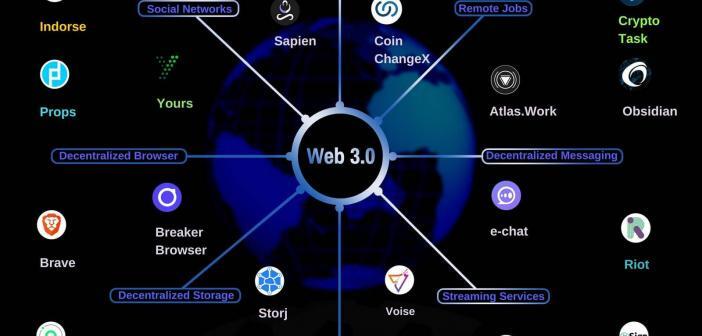
Image source: https://101blockchains.com/web-3-0-examples/

This piece, and searching through definitions of the online web, had me thinking of the next generation of web browsing. As history shows, the internet has had astronomical expansion these past couple decades. And of course it must continue to evolve, even if it’s the demise of all things virtual.

I ponder what the presence of decentralized web will grow to be, and if it will become commonly used by not only these select groups, but by average citizens. Or it may be the beginning of something utterly dangerous to mankind.

Source material: https://www.thenational.ae/world/isis-is-using-new-social-media-sites-after-facebook-and-twitter-crack-down-1.908339

Welcome Back, Flip Phones

2019 is starting to look a lot like the new 2009.

Once upon a time, in a land before Apple, there was Nokia, the queen of feature phones. Who could ever forget how awesome it was to walk around with your sliding, twisting, flippy cell phone? “Nokia” in the early 2000’s is as defining of a word to a generation as “Instagram” is today (Okay, that’s a stretch. You get my point). But seriously, whipping a sleek flip phone out of your pocket a decade ago was a sure easy way to up your cool factor.

Well, ladies and gentlemen, she’s back. And she’s cooler than ever.

Nokia just announced their flip phone comeback, which will be a revamped version of their original Nokia 2720 Fold. The new Nokia 2720 is obviously entering a highly competitive market with the majority of Americans having either iPhone’s or Androids. With the rise of the internet and instant gratification expectations over the last decade, who could imagine having a flip phone today? This is why Nokia created their 2720 model equipped with 4G internet and application capabilities such as YouTube, Instagram, Twitter, and Maps.

Another fairly recent trend seems to be the growing angst and distrust consumers are having with Apple products. It is becoming obvious that iPhone’s are not meant to last for years – just until the next iPhone comes out. Our society has become so attached to these devices that we have no choice but to comply with Apples purposeful software malfunctions and fork up over $500 for a new phone every two or so years. According to Florian Seiche, the CEO of the company who makes Nokia phones, people are placing more importance on having their phones longer, and they should benefit from doing so.

Another huge benefit is obviously the price tag on these new innovative flip phones. If I can essentially carry out the essential tasks of my iPhone, not have to replace my broken glass screen every two months, and get to revel in early 2000’s nostalgia every day, ALL for $600 cheaper?! Sign me up, Nokia. I’ll see you at Blockbuster with my Tamagotchi.

Next Stop Retaliation Station: Google’s Poisonous Work Environment

Image: https://www.hrtechnologynews.com/news/workforce-management/the-science-behind-googles-workplace-culture/99131

20,000 Google employees made the brave decision to conduct a walkout about a year ago to protest the mishandling of reports of sexual harassment and misconduct. It seems as though to this day not much has changed for those brave enough to speak out against the wrong doings. While Google seemed to say the right things and make the right moves publicly, changing there old polices to be more updated and making a public statement about the reports, behind the scenes employees are accusing the company of having a “retaliation culture”, which has made past and present employees too fearful to report any issues.

As reported by Recode, they found out numerous employees were punished for their actions with demotions, being pushed out, or made to work on lesser important or coveted projects after filing complaints with HR. The company would rather sweep issues under the rug than face the controversy head on, and this mentality is applied to a range of issues including everything from sexual misconduct to security. While employees have begin to voice their concerns about the retaliation, more often than not Google is loosing these employees because of this major issue.

I always find it puzzling that these larger companies would rather mistreat and belittle their employees rather than listen and work with them. I truly think they only end up hurting their image and credibility in the end, as people like myself hear these reports and stories and have no desire to work for such a place. I think the higher ups in companies like Google don’t understand that the way these situations are handled have a big impact on consumers, it is not like ten-twenty years ago where people don’t care or are ignorant to what is going on, people want to be informed about a companies moral code and values, so this doesn’t paint Google in a flattering light.

How Microsoft is Leading the Change in Tech and Innovation

https://www.nytimes.com/2019/09/08/technology/microsoft-brad-smith.html

In the midst of all the topics surrounding data usage and antitrust claims against big conglomerates such as Amazon, Google, and YouTube, there seems to be one big tech company that has avoided a majority of government backlash today–Microsoft. 

Although the company is no stranger to facing substantial fines due to its own antitrust claims, Microsoft has found a defensive approach in order to revolutionize its external affairs becoming a leading advocate in public policy matters and ethical settlements aligned with the government. 

Microsoft has restructured its external strategy by becoming less of a consumer company through market shifts and a newly defined business plan. For instance, the company has rallied behind the protection of consumer privacy and ordered for more legitimate sanctions in regards to artificial intelligence. Unlike companies today, Microsoft attributes its corporate personality change by not becoming reliant upon online advertising and storing personal data–a headline we are all too familiar with in the current media landscape. The President of Microsoft, Brad Smith, claims that, “when your technology changes the world, you bear a responsibility to help address the world that you have helped create.” The company still undergoes business selling ads but instead compromises with the views of its competitors and policymakers, making a case for bringing tech sectors and government together. 

Smith has since marshaled support for the Paris Call for international norms of behavior on the internet and for the Christchurch Call to curb terrorist and extremist content online. These initiatives are without restrictive law, however, Mr. Smith claims they could start global conversations that shape global policy.

Smith notes how the mentality behind the leaders in tech today is to continue to fight, because that is how they made it out to be successful in the first place. However, the more ethical approach is compromise– to reach out and be proactive in confrontational disputes. Microsoft’s has framed a fundamental model all tech companies should follow. To advocate for change in a productive way and make meaningful decisions that positively impact technology and the consumer. 

Twitter expands political ad limitations: Latest update aimed at state-controlled news media

https://marketingland.com/twitter-expands-political-ad-limitations-latest-update-aimed-at-state-controlled-news-media-266021

This article talks about a new policy Twitter is enforcing on their platform regarding advertising limitations. Specifically Twitter is no longer allowing state-controlled news sites to displaying advertisements on the platform. This is in response to the misuse of social media platforms by foreign powers (Russia) to influence the results of the 2016 election.

Twitter made the destinction that any state owned news media not dedicated to reporting the news as in purely entertainment, will not be subject to the new advertising policy. Public broadcasters are also covered in this category. State owned news media have 30 days to cease all advertising on Twitter before the new policy takes action. This new policy will have an interesting impact on digital marketers for state owned news media companies, as they will have to turn to create new ways to advertise to their audience on Twitter without using the platform. As for the potential impact of decreasing political advertising campaigns as a whole I feel their won’t be much of a difference in the long-run as long as other platforms don’t follow Twitter’s example.

The Fourth Branch of Govt.

Social media finds its place beside the legislative, executive and judicial branch as its own entity. Douglas McKinnon, a contributor to the opinion section of The Hill, classifies social media as a big player in influencing the government, considering our ever-expanding digital-dominated era.

Source: https://thehill.com/opinion/campaign/459384-politicians-put-too-much-weight-on-governments-social-media-branch

With platforms such as Facebook, Instagram and Twitter, accounting for billions of active users, the users’ political influence does not go unnoticed. When users comment, post and share, they are transferring information. And in an era where online users are so heavily involved in politics, the content being circulated is often related to some type of societal issue politicians are ignoring, or it’s used as means to expose a problematic member of government. If these posts gain enough traction, they’re bound to be seen, interacted with and even influence the politicians being discussed.

social media and politics

Image source: https://www.newmediacampaigns.com/blog/speaking-on-social-media-and-politics-at-new-hampshire-institute-of-politics

McKinnon theorizes that there are two driving forces as to why politicians are so heavily affected by social media: to defend and secure their own reputation in fear of criticism and to be liked by their fellows, CEOs and other societal members of high status and power.

And this is easily evident when exploring the social media outlets of politicians. An obvious example is President Trump’s continuous bullying tweets at any opposition to his ego.

Screen Shot 2019-09-03 at 12.41.37 PM.pngImage source: https://twitter.com/realDonaldTrump/status/1168898508608421888

Unsurprisingly, this tweet was sent this morning. It’s unsurprising because Trump rolls out ridiculing sentiments in an attempt to bully other people on the daily. But even on a smaller scale, we find politicians caving into lashing out at their counterparts online. It’s so prevalent that recently, Nancy Pelosi addressed liberal democrats in a closed-door meeting to refrain from using the aforementioned platforms to express grievances with other parties’ beliefs.

Source: https://www.politico.com/story/2019/07/10/pelosi-progressives-twitter-1405763

But what’s alarming is its existing impact on real world policy and legislation. Though sometimes, good change can transpire online. Social movements such as Black Lives Matter and the Me Too movement has ignited a massive amount of societal awareness and progress, by gaining global coverage on the reality of police brutality and exposing the surplus of Hollywood sex offenders.

Image result for harvey weinstein me too

Image source: https://www.law360.com/articles/1090065

However, with the online trolls, instigators and criticizers alike, it’s not hard to believe comments from these particular individuals have potential to influence government officials and the choices they make.  Think about how social media can fuel us to make decisions: whether good, bad or simply impulsive, who is to stay our leaders are not swayed just the same?

Is Threads the next big thing?

20190314-facebook-instagram

Recently, news has surfaced that Facebook is testing a new Instagram app titled Threads. The news surfaced after Mark Zuckerberg announced that Facebook is planning to shift users away from private messaging, among various other privacy changes. The app is designed to be used alongside Instagram and invites users to share various personal details with “close friends” including location, battery life, speed, text, video, and photo messages. The app constantly updates these various details and once users opt-in, Threads regularly updates their status for them. Users’ status updates will be showcased in a feed with a green dot showing which users are currently active. If the app is released to the public, it could be seen as a competitor to Snapchat as the picture messaging app already allows users to share their location, pictures, and videos with “close friends”.

Even though it is not currently released to the public, Threads raises various security and privacy concerns. Not only will the app give Facebook and Mark Zuckerberg a constant stream of personal data on its millions of users to analyze and mine, but it also normalizes the practice of sharing personal data. Sian Brooke, a researcher from the Oxford Internet Institute, states that, “You change your behavior if you’re constantly being looked at. If you know people see where you are, what you’re consuming, you’ll change what you’re doing, change what is normal in a group”.

In my opinion, I think the app sounds a lot like other apps that are already released and would need to have something unique that would set itself apart from other popular apps like Snapchat. Even though users would have to opt-in to the automatic updating features, I think that it restricts users’ privacy and would contribute to the normalization of sharing personal data/information. It’ll be interesting to see if the app ever gets released and what the app will “officially” contain. If Threads ever gains as much popularity as Mark Zuckerberg’s other apps, automatic personal data sharing could become the norm.

https://hub.packtpub.com/facebook-is-reportedly-working-on-threads-app-an-extension-of-instagrams-close-friends-feature-to-take-on-snapchat/


YouTube Accused of Children’s Privacy Violations

Article from The New York Times: https://www.nytimes.com/2019/08/30/technology/youtube-childrens-privacy-fine.html

Members of the Federal Trade Commission have voted to fine YouTube, a subsidiary of Google, $150-200 million dollars. These large fines are in result of the accusations that YouTube is illegally collecting personal data about children on its site.

This settlement would set a new record for the largest civil penalty ever obtained by the FTC, specifically in a children’s privacy case. The previous record holder was $5.7 million against the owners of TikTok, a video-sharing app. It is important to note that while the FTC has voted for the settlement to be approved, the Justice Department will review the request and ultimately make the final decision on the case.

This issue concerning the protection of children’s personal information comes at a time when legislators and lawmakers in the United States and the European Union are starting to aggressively challenge the power that these tech giants like Google and Facebook have and exercise over the societies in which they have large presence. Companies life Facebook often receive fines for abusing user data, but since they are so large and successful, a couple million dollars doesn’t exactly slow their efforts. Congress recently introduced a series of privacy and transparency bills in attempts to create more protection for Americans’ social media data and other important personal information.

One reason this fine is so large compared to others in the past is because the case has renewed complaints from consumer advocates that YouTube has failed to acknowledge. These complaints should require that the agency make substantive changes to its data-mining practices.

While this is a major consequence for any company, there has been response to this case stating that this fine for YouTube is more or less a slap on the hand. Legislators need to take a tougher stand to protect children’s privacy, especially since in today’s society children grow up with access to these and many other Social Media platforms.

Today, the issue within large tech companies and user privacy always finds its roots in data-mining and manipulation of personal information. I am especially interested in data, analytics, and marketing which is why I chose to read and summarize this particular article. I believe this debate is one that is far from over. Large companies and legislators like the FTC will always butt heads over privacy policies, and the lack-thereof.