Gen Z Women Driving the Digital World: A Look At The Ambivalence and Open-Mindedness Behind It

ST_18.12.13_PostMillennials_promo_1280x720

Image Source: Pew Research Center

Its been known since the beginning shift of the digital world and its relentless growth that young consumers are typically the most digitally connect. Yet, after conducting studies researchers have found that Gen Z women (mid-1990’s to early 2000’s) generally prefer products that offer the latest technology, but interestingly enough are very ambivalent to them despite their partake in use. Gen Z women’s interest and adaption of new digital technology is “eight percentage points more than American women overall, and five points more than millennial women” (Mahoney).

Despite this prominent trend of Gen Z women being one of the most adaptive users of innovative technology changes, marketers looking to sell their products have also noticed these women are much less likely to want to always be reached and hold strong opinions that new technological advancement is greatly hurting society (opinions you wouldn’t expect from a group that greatly uses new technology).

After noticing these kinds of demographic and psycho-graphic trends in Gen Z women, what does this mean for marketers, advertisers, researchers, inventors etc. who are looking to target their products to this large market segment? Well to start, they will have to begin focusing on digital devices and other services that Gen Z women can appreciate and view as a solution to some of their opinions. This could include devices that are aware and programmed to reflect this groups desire for privacy at times and helps diminish their skeptical view on technology’s overall well-being to humanity.

“Only 34% of Gen Z women say they’re optimistic about tech’s impact on society, 15 points below U.S. women overall, and 16 points below millennials” (Mahoney). Large technology companies will have to gradually adjust their products in order to stay ahead of this curve in the market. Tech giant Apple has already shown some progress towards this factor by incorporating applications on their market dominating product, the iPhone, which allows users to monitor and track their daily time spent on the device, which essentially helps counteract Gen Z women’s view of the problematic amount of time spent on digital devices.

It is clear how much time and money is implemented on researching different market segments in order for these companies to develop products that not only appeal to these groups, but understand their opinions and viewpoints especially on the digital age’s effect on society. If these businesses are looking to continue to gain the approval and use of specific groups for their products, innovation and recognition must come into play.


Sources:

https://www.mediapost.com/publications/article/341939/gen-z-women-tech-bivalent-fiercely-open-minded.html

https://www.pewsocialtrends.org/2019/01/17/generation-z-looks-a-lot-like-millennials-on-key-social-and-political-issues/


The game that could change everything

Image result for death strandingImage source: https://www.gamesradar.com/uk/preorder-death-stranding/

Death Stranding is one of the most anticipated video games this holiday season. The game, launching November 8th, garners mass attention on a daily basis. Though, what’s most interesting is that, even months after it’s trailer debut in the summer and it’s consistent online buzz, people are still piecing together what its actually about.

Watch the trailer below to see what I mean:


Game Radar summarizes it best:

“‘Death Stranding’ is a completely new type of action game, where the goal of the player is to reconnect isolated cities and a fragmented society. It is created so that all elements, including the story and gameplay, are bound together by the theme of the “Strand” or connection.”


Image result for Kojima Productions

Image source: https://thenerdstash.com/kojima-productions/

Hideo Kojima, the mastermind behind Kojima Productions, has produced other mind-bending, anxiety-inducing horror games such as Silent Hill. But something about Death Stranding is eerily different, possibly due to it’s immersive qualities that early game players claim has riddled them with fear every second they roamed the post-apocalyptic landscape.

Here’s what one previewer had to say…

“Death Stranding’s environment is one of the scariest and immersive I’ve ever experienced in a videogame. Although the world may seem barren and void of life, it never feels like you are truly alone… and it is terrifying… It feels like Hideo Kojima took the Silent Hills vibe and injected it with steroids.”

I believe this game is one to pay attention to and has the potential to be one of the most influential games of the year, maybe even the decade. Or it could totally flop in every way imaginable and be super confusing and underwhelming. Who knows? Though it looks like a refreshing take that has yet to be seen before; especially in an era where developers are just recycling their staple series, releasing remastered editions, or monotonous prequels, instead of creating original content.

Related image

Image source: https://codelist.biz/2019/08/26/7-minute-death-stranding-cutscene-recorded-and-shared-online/

And it stars Normas Reedus as the lead protagonist. Means nothing to me, but just thought that was important to add.

How Pinterest Built One of Silicon Valley’s Most Successful Algorithms

Image and text: https://onezero.medium.com/how-pinterest-built-one-of-silicon-valleys-most-successful-algorithms-9101afdfd0dd

This Medium article talks about a modification Pinterest’s algorithm for its feed. It is interesting to see how tech companies are molding themselves based on true human reactions that come from their users, with the popular and necessary purpose of generating more tailored content. Pinterest has been facing some problems regarding bias and how they channel content towards their users based on two simple questions at the time they create their profiles: their age and gender. Pinterest, like other tech giants such as Facebook and Twitter, want interactions to be more humane and substantial.

The company’s main goal in its first year as a public company is to diversify its algorithm enough and grow beyond its user base of white suburban women. The most complex part of this process is to achieve this goal without alienating their loyal crowd and, at the same time, not stereotyping newcomers. The way Pinterest has been filtering content towards users in the past seems to not be satisfying users who see themselves as exceptions to the norm. “Internal data might tell you that welcoming male users with a bunch of macho images boosts activation rates. What it might not tell you is that some subset of male users is turned off, or even offended, by the implicit assumption that they’re into “man caves” or pictures of “beautiful celebrities” who are all women.”

What Pinterest is finally trying to do is placing users into finer subgroups using an algorithm that lets you modify its understanding of your browser data. A woman who just broke off her engagement might, for example, never come back to Pinterest after joining it for the first time and seeing an overflow of wedding dresses. The new algorithm, then, allows users to manually increase personalization by “turning off” subjects they are not interested in despite it being part of their online behavior. 

This update, however, goes against the general tech rule of not giving people too much power to personalize their own feeds, as that might actually decrease engagement. The idea is to provide users with a news feed that knows better than the users themselves what they want to see. Pinterest, on the other hand, admits that tech’s assumptions and bias might not always put out the best content for their users, and hopes that this new algorithm will reduce complaints and make the app work better for everyone. It is important to point out that this new feature is completely optional, but it will definitely filter out trash content for specific tribes.

The Google Pixel 4 furthers Google as a media company

pixel-4s-1280x720


On October 15, 2019 Google release the Pixel 4. This is the fourth phone by the company and apparently the best release they have ever had. In the past there have been rave reviews about the phone regarding certain capabilities such as the camera and battery life. However, the newer version of the phone is being praised in more areas than two.

Google has become a media giant and an internet staple for the past 15 years. Though the company began releasing devices 6 years ago they continue to expand as a media company . In a world where we are competing with Apple and Amazon the strive to be outstanding in the media an tech world is becoming harder. Over the past 10 years Google has been searching for ways to be the biggest player in the tech world. The company’s Google Glass didn’t match its projected result. In 2011 the company bought the streaming website YouTube, which ended up being a great decision.

This raises the question of who’s going to be the biggest media company of this generation, are we still deciding or have one of these companies already won the race.

Politicians and Tech Companies: A Tale as old as Facebook

Sen. Elizabeth Warren announced recently that she will refuse any donations larger than $200 dollars from executives in tech and media. This is very on brand for the presidential candidate, as she has already made a promise to breakup larger tech companies like Facebook and Google. She fears that these companies have way too much power in their industry and make it difficult for any competition to enter the market. She also fights against big tech exces using donations to have influence in congress on whether they pass or block certain legislation that impacts their companies.

She has already made herself enemy No. 1 in Facebook CEO Mark Zuckerberg’s eyes, as he was recorded saying in a meeting that he would “go to the mat” to fight Warren if she became president. The current Sen. has brought up the idea of separating Instagram and WhatsApp from Facebook in the past and the immediately rubbed Zuckerberg the wrong way, even though ultimately the trio remained intact. She also made a point about how Facebook doesn’t fact check the political ads on the site, and refused to remove a false ad made by the Trump reelection campaign. To prove her point she ran her own false ad and even pointed out that there was a lie within the ad.

Now that the major brands and companies are predominately tech and media based there is no surprise that they would try to use their money and support to gain political preferences. In 2016, Facebook and Cambridge Analytica had one of the largest election based scandals ever, which resulted in a $5 billion fine to Facebook. Politics and the tech industry will never be separate entities again.

Article X

Image

Kids movie ‘Abominable’ removed from Vietnam

Image result for abominable map
The “nine-dash line” that caused Vietnam to remove Abominable from theaters

As we have recently seen, nothing is spared from Chinese international politics not even a cute animated movie. The Dreamworks animated film “Abominable” has recently been pulled from all Vietnam theaters for showing a chinese map that contains the “nine-dash line” The movie which follows a chinese girl who befriends a yeti has no intention of starting a political outrage but yet here we are. The nine-dash line in question is a hotly contested border created by the Chinese that includes a lot of territory that the governments of Vietnam, the Philippines, Taiwan, Malaysia, and Brunei all claim they have. 

Since China has made the claim in 1940 and created the nine-dash line, they have defended the territory their extensively. They have created islands and added infrastructure on those island so people can live there. They also have their navy defend the waters from other governments.This comes during a very problematic time for China or more importantly human rights, with China erasing any content they deem insults the government. South Park released was completely erased from the Chinese internet after they insulted China’s censorship laws. China has a 8.87 billion dollar movie market and Hollywood and other companies want to get a piece of the market but are sacrificing their rights or at least bending to Chinese censorship. The inclusion of the nine-dash line in the movie was there to appease the Chinese government but failed to respect the other countries involved in this dispute. It is scary to see so many companies and corporations give up their rights to appease a foriegn government based solely on money but I do not think this is going to stop and moving forward I think China is going to start threatening more companies into this censorship. Hopefully more media companies like the creators of South Park take a stand against this kind of censorship because if movies like Abominable can not escape the limelight any movie or show is a target for censorship.

Source: https://www.nytimes.com/2019/10/15/world/asia/abominable-vietnam-china-map.html

Blizzard silences Pro-Hong Kong player.

hearthstone-blitzchung-ed55

Image: https://metro.co.uk/2019/10/14/blizzard-gives-back-blitzchung-prize-money-reduces-ban-six-months-10912872/

Perhaps one of the fastest growing media markets in the global community is the Chinese market. Everyone from movie producers to videogame streamers have been attempting to grab a share of this market. However, in order to have access to this revenue stream these companies must comply with the authoritarian Chinese government and the most recent case of this is in connection to game publisher Blizzard. In a recent interview during their tournament for the popular online game Hearthstone, e-sports player Ng Wai Chung, better known in the community as Blitzchung, expressed his support for the ongoing protests in Hong Kong that seek to resist the growing power the Chinese government has on the city. In response Blizzard banned Blitzchung from competitive play for up to one year and refused to deliver the prize money he would have received for competing in the tournament. Word quickly spread of Blizzards actions, sparking consumer outrage. Many Consumers began calling for a boycott of Blizzards products, and memes and image lampooning the company spread throughout the internet like Wildfire. In addition, several streamers of Blizzards twitch channel followed in Chung’s example, knowing that they would be removed in a similar manner to the e-sports player. I understand the outrage at Blizzard and fully support Chung and the streamers action.  By attempting to cater to China and its market Blizzard has irrevocably damaged both their reputation and their profit margins domestically. This only fitting, as it is dangerous and immoral for Blizzard or any company to allow itself to be compliant in the actions and wishes of a totalitarian regime in the name of monetary game.

Article: https://www.cnn.com/2019/10/09/tech/blizzard-gaming-backlash-hong-kong-intl-hnk-scli/index.html

Apple Notifies When Their Users’ Location is Being Used

106170365-1570549735005uber-trackingArticle and Image: https://www.cnbc.com/2019/10/08/apples-new-location-alerts-show-how-often-other-companies-track-you.html

Third-party app tracking has been an issue for the past 5 to 7 years. As our technology becomes more connected, people start to see the dangers this connectivity can pose. Todd Haselton of CNBC wrote an article talking about how Apple’s new iOS software will alert its users when an app is tracking the user’s location. Many phone users keep their location services turned on because it gives them easier access to map and GPS services, they get alerts for the area they are in, and some apps have filters for the user’s location. Haselton urges users iPhone users to pay attention to this alert because location services is how apps like Facebook or Uber target ads to you, they sell all your data to third-parties and allowing them to have your location means they will track you all day and understand what a user does day-to-day. How much time one spends at work, do they buy lunch or pack lunch? Do they eat lunch at all? Do they use public transport? etc. Apps that can track a user’s location can learn all this information and Apple warning users is a great step towards better privacy.

Another interesting point brought up in this article is the use of Bluetooth as a mode of tracking. Android and Apple phones are both making a big push towards wireless everything. Anyone with an iPhone 10 now has airpods, which are headphones that require the use of Bluetooth. Hasleton talks about how apps like, “Dunkin’ Donuts, ESPN Fantasy, GroupMe, CVS, Amazon and others had access to Bluetooth, which could give them the ability to track my location through Bluetooth beacons on storefronts and in other public venues” (Hasleton 2019). Personally, I did not know that Bluetooth connectivity could help track location. It is a bit scary that storefronts have receptors to collect your data while you shop. This phenomenon is not new, but this is a new way to track customers. I knew that apps automatically turn on every permission, but it is a bit annoying that phones do that without the user’s knowledge and then bury the app permissions, so the user has to dig to stop this. It is good on Apple for reminding the users that these apps are using their information and location past when the user allows the app to use it. Although there are so many more steps to take for users to feel safe, this move from Apple will hopefully have users (not just Apple users also) wake up that their data is always being collected.

HKmap.live

Image result for hong protest

Image source: https://www.scmp.com/comment/opinion/article/3022168/refuse-hong-kongs-protesters-everything-and-they-will-fight-bitter

In Hong Kong, tens of thousands of people share a gripe towards their government and its allowance of ever-growing Chinese presence in their region. Since June, Hong Kong’s people have relentlessly protested an extradition bill their chief executive was ready to sign off on. Basically, this bill would allow the Chinese government to try Hong Kong citizens who’ve committed a crime in their jurisdiction.

Why is this problematic? China’s government has a very ambiguous ruling system, where criminals often go missing, or are tortured, among other unjust punishments. The possibility of interacting with this heinous judicial system was the final straw for many Hong Kong residents. And thus, weeks of protesting­–often violent on both sides­–proceeded.

Image result for hkmap.live

Image source: https://boingboing.net/2019/10/04/hkmap-live-hong-kong.html

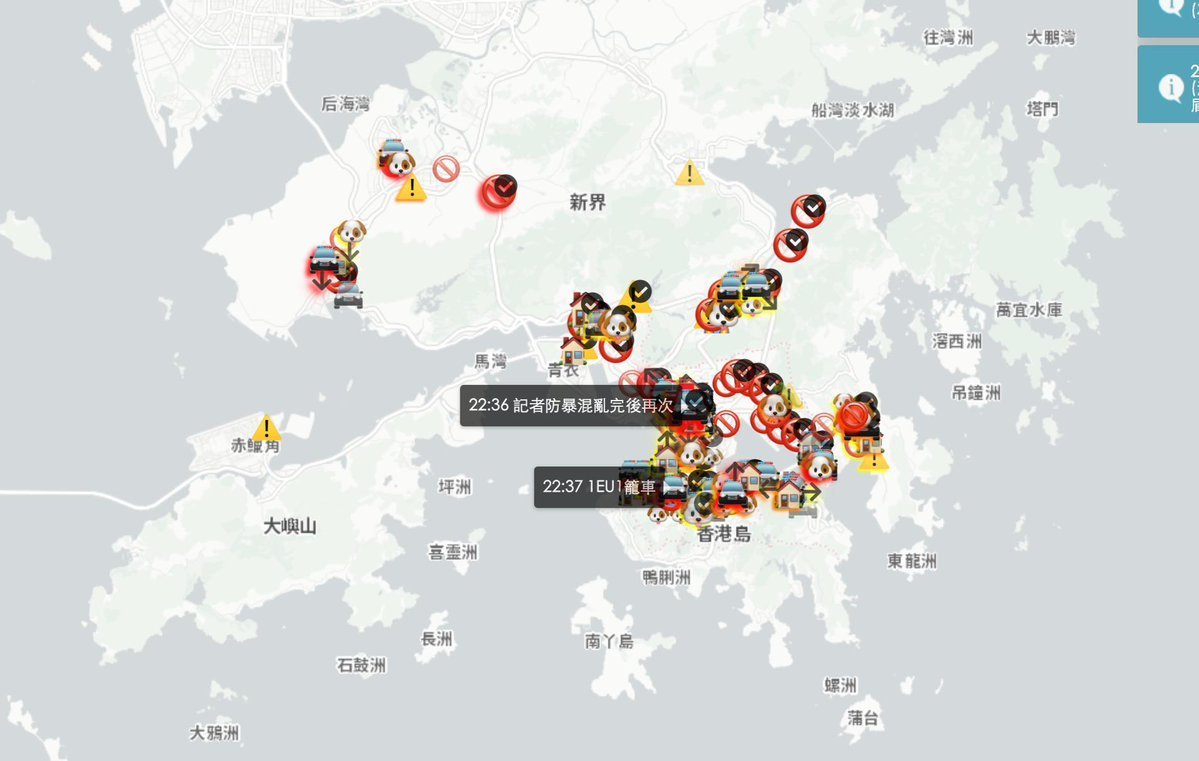
Apple recently allowed a mobile application, HKmap.live, for the use of Hong Kong protestors. This application allows protestors to track the location of polices forces. The developers created this in efforts to keep protestors alert and safe when exercising their right of free speech. Though, only days after Apple gave the OK for its launch, HKmap.live was taken down due to strong opposition from the Chinese, who believe this was an attempt to mobilize violence against their people.

The billion-dollar corporation claims protestors were using the app to attack police; therefore, they are taking it down permanently. Tim Cook, Apple’s CEO, says he received credible information that proves the validity of these claims, directly violating the company’s policy.

Though it should be noted that Apple has more at stake in China than any multinational country, because Apple “assembles nearly all its products there and counts the country as its No. 3 market after the United States and Europe”–which left people drawing their own conclusions as to the real reason why Apple took down the app so suddenly.

Related image

Image source: https://www.ft.com/content/427bb840-9c5d-11e9-9c06-a4640c9feebb

Tim Cook has no problem speaking on other political issues, such as gun control and immigration. However, he has been particularly silent on China’s politics, which directly effect tens of thousands of Hong Kong residents. It’s fair to assume that Cook may be prioritizing the future of Apple’s relationship in China, before aiding the people of Hong Kong.

Source material: https://www.nytimes.com/2019/10/09/technology/apple-hong-kong-app.html

Most Deepfakes Are Porn, and They’re Multiplying Fast

Image and text: https://www.wired.com/story/most-deepfakes-porn-multiplying-fast/

Deeptrace is a startup that has been doing some analysis on deepfakes, a term used to define video content that has been manipulated or fabricated with artificial intelligence. The tool came to life in 2017 on Reddit, when the account posted pornographic clips with the faces of Hollywood actresses over those of the real performers. Since then, it’s been more and more possible to insert someone’s face onto the body of another person, making it look extremely high quality. Such practices have been a source of entertainment on YouTube, but have been concerning many lawmakers that are fearful of political disinformation. With the 2020 elections right around the corner, politicians have been inquiring how deepfakes would be able to affect results with fake news.

Deeptrance has found that 96% of deepfakes that are around have pornographic content in them. In fact, most people on Reddit, where the subgroup Deepfake sees a lot of activity every day, use the feature as a tool for personal harassment rather than with the goal of destabilizing elections. According to a researcher at Deeptrance, there are forums in which people ask for pornographic deepfakes of women they know, showing a clear example of invasion of sexual privacy and, in many instances, cases of revenge porn. Politicians are still, however, worried about the future of their positions.

“Last week, senators Marco Rubio, the Republican of Florida, and Mark Warner, the Democrat from Virginia, both of whom are members of the Senate Intelligence Committee, wrote to Facebook and 10 other social media sites seeking more details of how they plan to detect and respond to malicious deepfakes. The legislators cautioned that fake clips could have a “corrosive impact on our democracy.”” The lawmakers’ concerns seem plausible when you look at the case of the Malayisian political aide who was arrested after a deepfake showed him having sex with the minister of economic affairs.

There are many other articles on WIRED about deepfakes, their origins and many variations.