Quibi, The New Streaming Service on the Block and Its Headlining Celebrities

106327276-1578518344216rts2xo4z.jpg

       With streaming services on the rise, chairman Jeffrey Katzenberg and CEO Meg Whitman, are trying their luck with a new service, Quibi. Launching on April 6th, Quibi is a service that offers “short segments” that are ten minutes or less. What makes it different from Netflix or Hulu is the fact that it is meant to be streamed from your phone since it is able to be watched in a landscape or vertical view. While watching its shows you can turn your phone to switch the views in order to see different perspectives of the shows. For example, you can watch a cool car chase scene in landscape mode, but if you turn it vertical, you can see helicopters in the sky chasing the cars. There have been many advertisements hitting social media apps such as Twitter, and it even had its own commercial during the Super Bowl where it had Guillermo, from Jimmy Kimmel Live!, trying to pronounce its name.

       For $4.99 a month, Quibi plans to release around 175 shows and about 8,500 “bites of content”, many of which are scripted shows, unscripted reality and even documentaries. They also plan on having daily shows that cover news and lifestyles tips. Putting in over a billion dollars into this service, Katzenberg and Whitman have managed to acquire over 50 well known Hollywood celebrities to create and star in their shows such as: Jennifer Lopez, Tom Cruise, Lebron James, Ryan Reynolds, and even Stephen Spielberg. Many people think that Quibi will become a successful streaming service while others predict a massive flop, however, we can’t know for sure until its official launch.

SXSW Canceled as Austin City Officials Declare A Local Disaster

Screen Shot 2020-03-09 at 10.21.02 AM

As fears surrounding the spread of COVID-19 continue to increase, we are beginning to see the impact of the crisis on virtually all sectors of economic, political, and social life. Countless national events have been canceled or postponed until further notice to combat and contain coronavirus. An article published by CNN on Friday reported that South by Southwest is now among one of the latest cancelations as other large-scale future events await their fate. 

SXSW Austin’s annual tech, film, and music conference was officially canceled last Friday due to concerns surrounding COVID-19. This decision came just two days after Autin public health officials announced that the annual event would continue as planned despite several high-profile dropouts and public demand to cancel the event. Austin’s Mayor Steve Adler declared a local disaster that effectively canceled the event, which was scheduled to take place March 13th-22nd. This marks the first time in 34 years that the event has been canceled. In a statement released by SXSW organizers, they explained, “We are devastated to share this news with you. We are now working through the ramifications of this unprecedented situation.” Organizers have not yet ruled out the possibility of rescheduling and are working to develop an online alternative. Further information is said to be shared with prospective attendees in the coming days. 

Many, however, were not surprised by the decision to cancel as many of the event’s biggest names, including Twitter, TikTok, Facebook, and Vevo, pulled out just days before the cancelation. Twitter was the first major company to pull out followed soon after by Facebook, Intel, Vevo, and Mashable. TikTok later came to the same decision, promising to explore “alternative ways” to bring content to prospective audiences. Following the dropouts, organizers announced new keynote speakers, including Hilary Clinton and Andrew Yang. Organizers ensured the public that they were working with local, state, and federal agencies to ensure the event would go safely, despite existing circumstances. Each year, the conference draws thousands of visitors to the city of Austin. According to reports, last year, the event generated approximately $355.9 million for the local economy. Many local businesses are concerned about the potential repercussions of the event’s cancellations, particularly for the local economy. 


Why Food Giant ‘Unilever’ Has Vowed To Stop Marketing Its Ice Cream Products To Children

Food giant, Unilever announced recently that they were going to change the way they market their products to children due to the rising childhood obesity rates in America.  According to their company,

“By the end of 2020, we will stop marketing and advertising foods and beverages to children under the age of 12 in traditional media, and below 13 via social media channels…We’re implementing strict controls concerning the placement and content of our ads, and we won’t use any influencers, celebrities or social media stars who primarily appeal to children under the age of 12.”

The company plans to implement a “Responsibly Made For Kids Promise” specifically for their ice cream business that ensures all ice creams will be responsibly communicated, responsibly sold, and responsibly developed. What this means is that they are shifting their advertising to speak to parents and caregivers – the people they feel should be the decision-makers when it comes to their children having a treat. In addition to that, they are going to sell their products with a “Responsibly Made For Kids” logo to further communicate their promise, and by the end of 2020 they are going to make sure that every ice cream in the kids’ range will have no more than 110 calories and a maximum of 12g of sugar per portion.

By making these positive changes, Unilever strives to promote a company that is not only transparent with their consumers but who also puts children at the forefront.


Source:

https://www.unilever.com/news/news-and-features/Feature-article/2020/why-we-are-changing-the-way-we-market-products-to-children.html

We’re Putting Your Many Misconceptions About The Coronavirus To Rest, And Here’s Why:

With the Coronavirus being heavily discussed in the media and amongst individuals in our present society, it’s natural for many to be fearful of the virus and its potential threats. In saying that, however, it is evident that much of the world’s fear of the virus stems from misconceptions and misinformation that the media has put out into the world.

For this reason, I find it important to debunk the biggest misconceptions about the virus to lessen the amount of fear one may have when thinking about its said severity and its spread throughout different countries.

To start, many believe that contracting the Coronavirus means you will automatically find yourself on your death bed–which in fact, isn’t the case at all. In an article with Business Insider, two pathologists sat down to discuss popular misconceptions about the virus and said:

“Based on the data that is coming out, it seems to be a mild type of viral infection. There’s a 2% fatality rate and about 18% to 20% that may be in, kind of in the critical condition range…And those 2% who die are the sickest. They’re in the hospital already. So even those in the hospital have probably a 98% chance of surviving.”

Another misconception that many people seem to believe as fact is that wearing a mask will protect you from contracting the virus. The thing about these masks that many do not know is that the typical doctors mask that you see the majority of the population wearing is oftentimes not worn properly which decreases its effectiveness entirely. In addition to that, there are more effective masks that healthcare workers wear which are called the N95 masks, and although these masks are meant to filter particles that are airborne with 95% efficacy, they are meant for people who are actually sick, rather than people who are fearful of becoming sick. So, instead of going out and purchasing a mask, washing your hands for at least 20 seconds and avoiding touching areas of your face and mouth are much more effective practices when it comes to decreasing your chances of contracting the virus.

Lastly,  one of the biggest misconceptions about the Coronavirus is that it is the most dangerous virus–which is not the case. Although the media has made it out to be a very frightening/deadly virus, it is much like the flu and as I mentioned before, only kills about 2% of people infected, which is much less than that of the flu. In fact, pathologists Stephen Morse and Syra Madad expressed that there are many more recoveries than there are fatalities.

“I think the official count is now 6,000 recoveries. But, you know, one of the funny things is that we don’t usually report recoveries when someone is discharged from the hospital. So all those recoveries, probably there are many more on the way as well.”

So, next time you hear something about the Coronavirus, ask yourself, “Is this fact, or is this merely a misconception that is making me more fearful than I should be?”


Sources: https://www.businessinsider.com/coronavirus-myths-debunked-wuhan-china-2020-2


The Rise of Influencers

Image result for influencers


Influencer marketing is a massive aspect in Today’s world. There are countless influencers; for example, you would find the most influencers on Instagram. Influencers have the power to change and affect people’s purchasing decisions because they have many followers, authority, and knowledge about it. Influencers have become such a big marketing tactic for companies. In this article, Vamp surveyed over a hundred marketers to figure out how they work with influencers and where they see success. What they found out from doing this was that eighty percent of people said that influencers showed the same or better in assets than brand created ones. It states that companies also save forty-one percent more in engaging in influencers. The only thing is figuring out who they should pick to influence their company because, in some cases, they can be a make or break for them. There are 3.4 billion people on Instagram, so that creates a vast space for people to advertise and get there a product out there. There are also a few types of influencers. They can be the Mega influencers, and that is someone who has over a million followers, macro-influencers are about the same but have fewer followers. The last two are micro-influencers and nano influencers, which are people with only a couple thousand down to a couple hundred followers but still manage to get the product out there. There are also a few different ways people can be influencers. They can on there blogs, podcasts, Instagram’s, and even youtube channels. I believe influencers are such a growing thing company’s should jump at the first chance they get to have one.


UConn researchers creates a smart-bandage to help chronic wounds heal more effectively

Uconn researchers create a smart-bandage, a wearable device, that can deliver medicine to patient with minimal pain. The bandage, developed by Dr. Ali Tamayol, and researchers from the University of Nebraska-Lincoln and Harvard Medical School, is equipped with miniature needles that can be controlled remotely- allowing the drugs to be programmed by care providers without visiting the patient. Providers can wirelessly control the release of drugs delivered through the miniature needles. This method has proved to be more effective than tropical solutions when it comes to wound closure and hair growth. I believe they are alot of safety and privacy concerns with this smart bandage. There are also many positives to this because It pushing health care forward.

Facial recognition start up has it’s full client list stolen

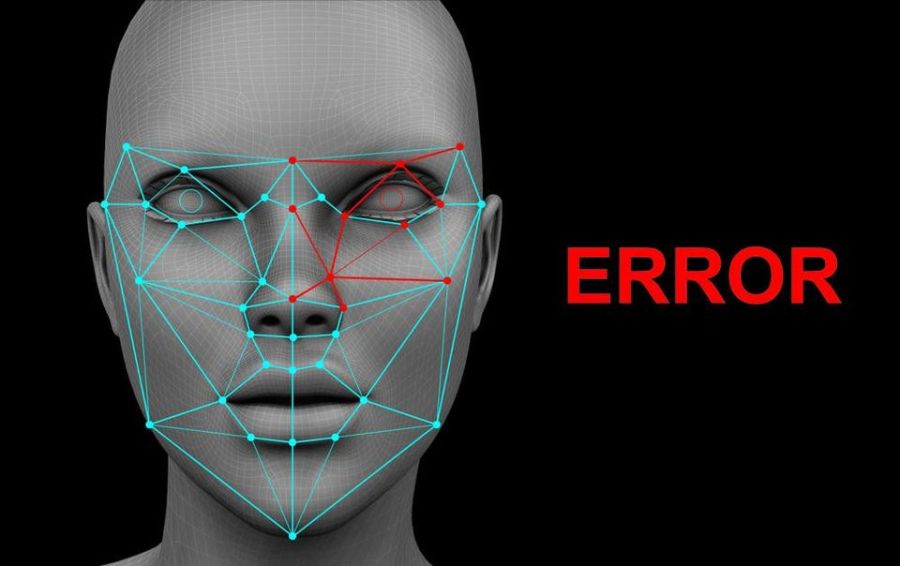
Clearview AI says a recent vulnerability has allowed someone to gain “unauthorized access” to a list of all its customers. Unfortunately, data breaches are apart of life in the 21st century. The vulnerability kept hackers at bay from accessing Clearview’s accounts of 3 billion. This vulnerability has since be patched and servers were checked but no breach was reported.

https://flip.it/J0pcsd

Disney CEO, Bob Iger, to Step Down

bob-iger-file-ap-jef-200225_hpMain_16x9_992.jpg

       On Tuesday Disney announced that Bob Iger would step down from his position as the CEO of Disney. This announcement is apparently effective immediately since Iger will become the executive chairman of Disney throughout 2021. Iger’s reasoning for stepping down shortly before his supposed retirement in 2021 he claims is due to the fact that he wants to focus more on the creative aspect of major projects, especially now more than ever with the newly launched Disney+. When it comes to the success and monopoly of Disney, Bob Iger is responsible for its immense success in terms of acquiring more content and media companies before launching Disney+. After the announcement of his stepping down, shares of Disney fell about 2.5% in the following hours.

       Stepping into the CEO position is Bob Chapek, former chairman of Disney “parks, experiences and products.” According to Chapek, Iger had formed such a distinct path and “strategic pillars” which he intends to keep working on and following. Currently, Chapek will continue to report to Iger until he is formally appointed to the Board of Directors. When it comes to the position and what is to come in the future, Chapek says, “That’s my sweet spot, and that is something I could leverage now throughout all my experiences not only at Disney, but even before Disney, in terms of figuring how we take the data, information, the technology, and once again our storytelling, right direct to the consumer so that we can take all the great equities we have and continue to build those for our shareholders.”

Until Bob Iger takes his formal position on the Board of Directors, we can only speculate what is to come for Disney in the future.

What Harvey Weinstein’s future in prison means for the industry and its consumers

Image source: ABC News

The previously influential film producer, Harvey Weinstein was found guilty of charges related to sexual assault last Monday, February 24 by a jury in New York City: a huge win for women in the media industry, as well as women in general.

The whole Harvey Weinstein issue that boosted #MeToo dates back to more than two years ago. It’s been a long journey for the Times Up movement, and this seems to mark the beginning of what some actresses and female producers are calling a “new era of justice.”

Weinstein was officially found guilty of sexual assault in the first degree and rape in the third degree. To this day, the 67 year-old has denied every single accusation of nonconsensual sex. The co-founder of Miramax is also scheduled to face other sexual assault charges in a Los Angeles court.

By the end of the verdict, Weinstein was handcuffed and sent to jail until his sentence, which is set to happen next month. His jail-time penalty could range from five to 25 years. Even though he and his lawyers managed to avoid the other three more serious accusations, this all marks a point in history that might spark a domino effect to take action towards the other many sexual assault-related accusations within the film and media industry that remain uncovered.

Now, what does this all mean on a much larger scale for other media companies? Well, they have to be even more careful and “woke”. In media management, a company’s reputation is everything. So, now they must be be morally better, and therefore support that morality. They should support those who speak up, instead of covering up the scandals.

As for us consumers, we must make sure to keep the momentum going and use our voices somehow. To our advantage, audiences have a bit more leverage over the decision making of media and production companies, compared to a few years ago.

Sources:

https://www.refinery29.com/en-us/2020/02/9458760/harvey-weinstein-verdict-celebrity-reactions

bbc.com/news/entertainment-arts-41594672

Is TikTok Manufacturing Millionaires?

Screen Shot 2020-02-25 at 12.34.05 PM

According to a new report published by the Guardian, TikTok viral stars could potentially bring in earnings of up to $1 million per post. Given these numbers, it should come to no surprise that more than half of millennials and Gen Zers aspire to become social media influencers. TikTok has quickly become the go-to site for overnight celebrities as its algorithm alone enables virality. Platforms like YouTube and Instagram tend only to reward those who already have achieved fame. This factor has led to the rapid growth of the app and subsequent commercialization. 

Those who achieve virality on TikTok could potentially make a lucrative career out of their success on the platform. According to current research, popular TikTokers can charge up to $200,000 per post for brand collaborations and promotions. As the app continues to expand, researchers predict TikTokers will cost as much as $1 million per post as soon as next year. In exchange for a 15-60 second post, brands are willing to pay hundreds of thousands of dollars. Estimates suggest users can charge up to $0.005 per follower for sponsored posts and collaborations. This perfectly demonstrates the value and reach of the app and the profit potential that has attracted users. 

Among the app’s most successful accounts is that of 17-year-old Loren Gray from Pottstown, Pennsylvania. Gray is considered the most marketable creator on the app. This fact has led researchers to estimate earnings of over $197,000 per post. Loren’s popularity on the app has secured her record deals with major labels, including Virgin Records and Capitol Records. She shares new videos daily and has received over 2 billion likes collectively. Just last year, Gray was paid to participate and promote a “guac song dance-off” by Chipotle. This being only one of countless brand collaborations, the 17-year-old has shared with her more than 38 million followers. 

For some, $1 million for a 15-60 second post is unheard of and downright ridiculous. According to industry strategy professionals, this signals a significant shift in the industry. Brands are now allocating funds to digital marketing, and in turn, moving away from more traditional media and advertising conventions. Popular Tiktokers have the potential to make or break a product launch for a brand and allow brands to spread their message at the touch of a button. The influence held by these individuals makes their platform invaluable, and brands across the globe are willing to spare no expense to collaborate.