The newly merged company has had a rocky start to the year 2020, however the sudden surge in television ratings due to the COVID-19 pandemic may be their saving grace.
ViacomCBS has experienced a significant stock increase this week, which is making investors warm up to the idea of the massive layoffs that have been occurring. Approximately, 500 to 700 employees are to be let go across different departments of the whole giant media company. According to Deadline, one of the most affected divisions is Entertainment and Youth. This has all been part of what the company’s CEO describes as “intergrating and streamlining” their operations.
While the consequences of the coronavirus may be beneficial to some parts of the company, they are disastrous to others. Paramount Pictures, for example, cannot produce any type of content or even release films.
Viacom and CBS officially merged in December of last year and will continue to operate under the bigger corporate umbrella National Amusements. It will be interesting to observe if ViacomCBS manages to find its footing in the industry within the year and what divisions of the company will be most negatively affected by this pandemic.
Abigail Disney is a social activist, philanthropist, and Emmy-winning documentary filmmaker, but she’s also the granddaughter of Roy O. Disney, the co-founder of The Walt Disney Company, making her the heir to the Disney fortune. 60 years old, she still declines to say how much she has inherited, but she has donated over $70 million since she turned 21. The article I read from CNN Business is about Abigail’s reaction to Disney’s decision to furlough hundreds of thousands of low-wage workers while they pay their executives millions in the meantime- “What the actual f*ck?!”
Abigail stated that not only did the executives pay themselves big bonuses but they also issued dividends to shareholders after they decided to get rid of thousands of people’s jobs that “aren’t necessary at this time”. The employees Disney decided to furlough were from parks, resorts and entertainment productions divisions, who comprise more than 75% of the company’s employees with 223,000 people.
Last year, Bob Iger, the former CEO, now Disney’s chairman as of February, made over $47 million last year, which was 911 times the median worker’s salary. Abigail has criticized Disney in the past saying for executives “collecting egregious bonuses for years”, and now is all but shaming them for failing to take care of their employees in a just and ethical manner. Thankfully, this criticism from Abigail has led to current CEO Bob Chapek to take a 50% pay reduction during this time, while Bob Iger has agreed to cut his entire salary during the pandemic.
I wanted to write about this article because I find it encouraging that Abigail Disney feels the need to be, and always has felt, that being a critic of The Walt Disney Company is important because while she holds no official position there, she is the one who will inherit the Disney fortune and she wants to make sure that the legacy of her family’s company is one that is moral and ethical. I also find it to be an even more powerful example and that she is really heard, even when going on a twitter rant because while she’s an outside perspective, she is a direct beneficiary of Disney’s profits.
Following up my last blog post about public companies announcing they would not be returning funds meant for small businesses is an article from NPR which discusses how Shake Shack is returning a $10 million federal loan after the Paycheck Protection Program (PPP) that was meant to help small businesses ran out of money in less than two weeks of operation.
The company will “immediately return the entire $10 million PPP loan we received last week to the Small Business Association (SBA) so that those restaurants who need it most can get it now,” their CEO said. Shake Shack employs about 8,000 people at its restaurants across the United States, but only around 45 people in each location. While their revenue to date marks a decline from 2019, the company has $104 million in cash and assets, says it has secured other loans to cover the money that would have come from the SBA.
Shake Shack’s CEO criticized the PPP system for being confusing by limiting the funds and setting the program to run through June 30 – “it’s inexcusable to leave restaurants out because no one told them to get in line by the time the funding dried up”. 74% of the PPP were for less than $150,000, according to the SBA- but that represents only 17% of the total money disbursed through the program. Nearly 28% of the money was awarded to companies seeking loans of $2 million or more. 9% of all approved PPP funds were granted to the food service and accommodation industry, roughly $30.5 billion.
I wanted to write this article because Shake Shack clearly did the right thing by returning the funds, but the PPP system that has been set up is indeed confusing and something needs to be changed. Yes, I think Shake Shack made the right, and ethical choice, but I don’t commend them for it simply because it would have been the wrong thing to do had they kept the funds. As the article stated Shake Shack has $104 million in capital, and as their CEO essentially said, they can afford to pay for some things out of pocket rather than take $10 million away from the majority small businesses that really need them (the 74% that were granted for less than $150,000).
An article from CNBC discusses several public companies that took small business rescue loans say they are not giving back the cash” discusses how not only did the Federal Government mistakenly give public companies and corporations the rescue funds that were specifically meant to go to small business owners, but many of these companies are now officially taking the stance that they will not give these funds back- all while the rescue fund for small businesses have been wiped out entirely and there is no more money to give at the time being.
CNBC reached out to the 41 biggest publicly traded companies that had received Paycheck Protection Program loans to see if they would be returning the funds. Six said they had no plans to return the funds, five said they will (or had) returned the money, while 30 either did not respond or said their decision was pending. One CEO keeping the cash said, “to return would be breaching fiduciary duty.” The government warned public companies on Thursday to return the relief loans in two weeks if they wanted to avoid scrutiny about whether it was necessary for them to take the capital.
I bring this instance up for a few reasons, first being why hasn’t Uncle Sam simply withdrawn those funds that were wrongfully given to public companies, and reallocate the funds to those small businesses that are still waiting and unable to receive any additional help? It seems that this mistake on behalf of our own government could easily be fixed, yet they are allowing the true mom-and-pop shops to suffer while corporate America continues to get more and more benefits (i.e. tax breaks, increasing salaries for executives, etc.). Simply warning companies that they will only ‘face scrutiny’ if they do not return the funds is a very weak threat. When congress wants something, they find a way to pay for it- don’t feed the public that there is no more available rescue funds for small businesses while the news is celebrating the frontline workers during the pandemic such as grocery stores, delivery/trucking, healthcare, many of whom work for small businesses and corporations alike- don’t make it a choice about who is in more need of help when the economy is halting.
The popular video platform, YouTube, announced a new feature to counter the popular theories and other scientifically-inaccurate videos about COVID-19. They had been using fact-check pop-up alerts whenever users would type in a search prompt that tends to lead to misinformation
They call them “fact-check information panels” and each one links to third-party articles that disprove some of the videos that allegedly hold information about the coronavirus. YouTube implemented measures to detain the spread of the wide array of conspiracy theories that have been popping up ever since the pandemic. Some of these include the rumors about 5G signals being somehow related to the virus and videos about false cures or remedies.
A Pew Research study published in 2018 stated that YouTube is the second most used social media platform US adults use as a resource to get information. Knowing that, in my opinion, they should have implemented measures like these before. I imagine they didn’t do it because it might seem annoying or set its users off. Nevertheless, now we know it is possible for them to apply similar features into their platform and play a more active role against the spread of misinformation, not just hide behind the Terms and Policies.
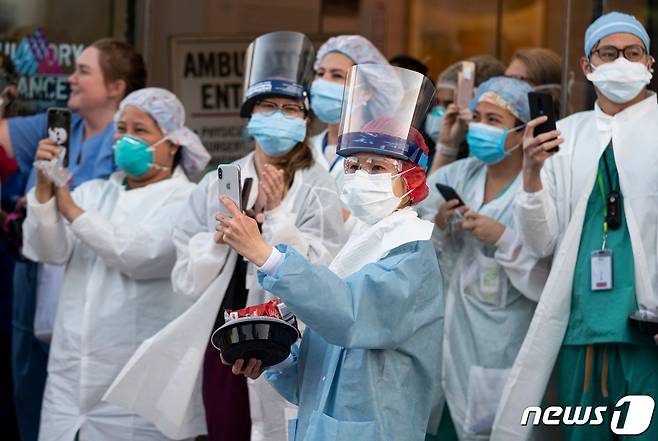
The New York Times (NYT) reported on the 27th that the emergency room chief doctor, who treated patients with Covid-19 at a hospital in Manhattan, New York, made an extreme choice.
Rona M. Brin (49, female), who works at the New York Press Biterian Allen Hospital, was in charge of the emergency room during Corona virus’ most intense period, and she also contracted Covid-19. He then took a rest and returned to the hospital, but died in Virginia on the 26th after returning home.
His father and other family members said that Dr. Brin had no mental history, but he seemed to be out of his mind by the time he talked to him last, so they could see that something was wrong.
The hospital he worked for was a 200-bed hospital north of Manhattan, with 170 Covid-19 patients. As of April 7, 59 Covid-19 patients were killed.
While he was taking care of the patient, Dr. Brin was also sent home with Covid-19. After about 10 days of rest, the doctor returned and was sent back home. He then made an extreme choice while traveling to Virginia with his family.
Experts believe that medical workers who have been fighting Corona virus may have suffered huge mental effects due to a lack of medical equipment, fear of losing their loved ones, including colleagues, and hard labor.
According to a study released by the international journal “Jama Network Open,” a survey of Chinese medical workers who fought on the front line with Covid-19 showed a higher percentage of serious mental health symptoms such as depression and anxiety than ordinary people.
There is no evidence that Covid-19 played a direct role in Dr. Brin’s own death. According to experts, suicide is caused not just by one thing but by complicated reasons. However, Dr. Brin’s father said, “My safety is becoming dangerous, but I want my daughter to be remembered as one of the thousands of medical heroes who came forward to help others.”
U.S. President Donald Trump has signed an executive order to suspend immigration to the U.S. due to the outbreak of the new coronavirus infection (COVID-19).
President Trump said in a briefing at the White House yesterday (22nd) at the Coronavirus Task Force that he has signed an executive order to temporarily suspend immigration to the United States to protect great American workers.
As a result, the issuance of permanent residency will be suspended for 60 days, and there is a possibility that it may be extended depending on the circumstances.
The executive order will take effect today (23rd) at 11:59 p.m.
However, researchers, medical staff, investment migrants, spouses of U.S. citizens and children under the age of 21 are excluded from this restriction.
Also, it does not affect foreigners entering the U.S. on temporary visas and agricultural workers, such as skilled workers such as employment visas.
President Trump’s move comes as Americans, who lost their jobs in the coronavirus pandemic, are calling for deregulation and calling for economic normalization.
In fact, the U.S. has seen economic damage grow, with 22 million people losing their jobs in the last four weeks.
The WSJ observed a record unemployment rate of around 15 percent in April. Ahead of the announcement of the U.S. GDP in the first quarter of the year, some warn that the U.S. economy will record its worst performance since the 2008 global financial crisis. White House Senior Advisor Kevin Hassett, President Donald Trump’s economic book, also warned ABC on the 26th that worsening economic indicators are inevitable for the time being, saying, “The unemployment rate could come close to the Great Depression in the near future.”
The Wall Street Journal (WSJ) reported that Wall Street experts expected U.S. growth rates in the first and second quarters to be -3.5% and -25.0%, respectively. U.S. negative growth is the last in the first quarter of 2014 (-1.1 percent).
Second-quarter GDP is expected to suffer a bigger slump. Wall Street financial firms such as JP Morgan Chase & Co. and Goldman Sachs have already forecast that the second-quarter growth rate will be in the -30 percent range. It is predicted that the unemployment rate for April, which will be announced early next month, will also exceed 4.4 percent in March and reach around 15 percent.
Major conglomerates’ first-quarter earnings are also unlikely to be free from the Corona 19 shock. Google’s parent companies Alphabet and HSBC Bank on Friday and Microsoft Airbus on Tuesday will unveil their report cards. Apple’s Amazon McDonald on Thursday and Exxon Mobil and Chevron on April 1.
Prospects are mixed after the second half. Some predict a “V-shaped rebound” and others say that “the slump will continue throughout this year.” Treasury Secretary Steven Mnuchin told Fox News that a third-quarter rebound will emerge when economic normalization begins next month. In the WSJ survey, 85 percent of the respondents also said the Corona 19 crisis will subside in the second half and the economy will show signs of recovery. Bank of America CEO Brian Moynihan, on the other hand, predicted CBS that the U.S. economy will only recover to its pre-19 level later next year.
The European Union, which will announce its first-quarter GDP on Thursday, is also likely to post negative growth. International credit rating agency Fitch Ratings on Tuesday presented its growth forecast for Italy and the eurozone as a whole this year at -8.0 percent and -7.0 percent, respectively, with the highest number of deaths in Europe.
A casino in Las Vegas, Nevada, was seen on Wednesday (local time). The suspension of operations due to Corona 19 left the casino crowded with people 24 hours a day.
Since the Corona 19 crisis began in earnest, as many as 350,000 people have applied for unemployment benefits in Nevada. It marks the fifth consecutive week that jobless applicants have broken new records, marking the highest figure in Nevada’s history. Las Vegas market research firm “Apply Annalis” estimated that the unemployment rate in Las Vegas would reach 25 percent. The figure is twice as high as the Great Depression, and the figure continues to rise. Jeremy Aguero, CEO of Applied Analysis, said it is “unprecedented from an analytical point of view” and that “there is no quasi-base on the current situation.”
Nevada pays unemployment benefits for 26 weeks, up to $469 per week. However, the recent surge in demand for unemployment benefits has paralyzed Internet sites that manage them, and delayed work. “We received 28,000 calls a day last month,” said Rosa Mendes, spokesman for Nevada’s Employment and Training Rehabilitation Bureau. “This is the first time in state history.” Complaints such as “the waiting time for phone calls alone was nine hours” are rising in various social networking services, while criticism is mounting that “the authorities focus only on those who are confirmed to be Corona 19 and don’t care about those who have no money to buy medicine because they lost their jobs.”
As the unemployment problem spreads out of control, the Las Vegas and Nevada governments are also agonizing. It would be nice to ease the evacuation of homes right away in consideration of deepening economic wrinkles, but there are also many counterargument that it could encourage the spread of Corona 19. Las Vegas Mayor Carolyn Goodman said in a broadcast interview last week that casino and other non-essential facilities should be reopened. Las Vegas hotels and casinos are also seeking to resume operations from the 15th of next month, offering heat tests on guests as an alternative. Nevada Governor Steve Sisolak, however, does not specifically mention the timing of easing the evacuation of homes, saying, “It is not yet time to resume operations.”
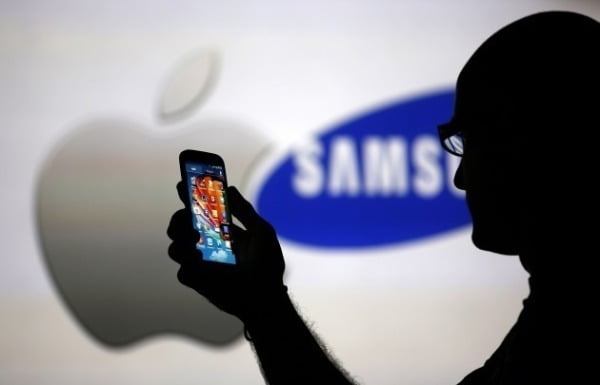
Smartphone makers Samsung Electronics and Apple, which divide the global market, are competing for content beyond handset competition. The point is the strategy of the two companies, which are 180 degrees different. The Galaxy, which has leading companies such as Netflix, YouTube, and Spotify, and Apple’s iPhone, which grows its own content ecosystem, will face off.
First of all, Samsung has integrated with the world’s largest music streaming site “Spotify.” You can easily search for music and podcasts and set your favorite songs as alarms. It is also connected to home speakers.
In particular, it is notable that Samsung Electronics has increased the supply of contents to low-end smartphones unlike before. Securing content from manufacturers is considered as an important factor as device performance and specifications as it can attract additional consumers.
Samsung also collaborates with Google in video call services. It allows Google Duo to run wide-angle screens and augmented reality only on Galaxy devices. In the case of YouTube, the company immediately provided Samsung with a feature that allows the 8K video to be compatible with YouTube, along with the YouTube premium. This collaboration is expected to become more diverse and concrete. A Samsung Electronics official said, “We will move toward solidifying partnerships with global IT and content companies.”
Apple is against it. It is going to establish an ecosystem for its own contents. Apple seems to be focusing on its content business under the motto of “growth without iPhone” since last year. It is trying to transform itself into a content company by strengthening “Apple services” such as music streaming service Apple Music, App Store Apple Arcade, Apple Podcast and iCloud Apple Care.
In this context, dozens of Apple service support countries have been added to Africa, Latin America, the Middle East and Asia along with the recent release of iPhone SE.
It is seen as a strategy that aims to increase Apple loyalty and even sell premium Apple devices from a long-term perspective by launching low-priced smartphones in emerging markets and allowing them to experience Apple services. iPhone sales are concentrated in several specific markets, including North America and China.
Apple, which continues to update its Apple services, has helped secure its own content services by introducing new Apple Arcade and Apple TV Plus last year.
It is also doing well. Apple’s service sector is taking up an expanded portion of Apple’s entire business. Apple’s gross margin in the service sector, which accounts for more than 20 percent of its total sales, is reported to be 64 percent as of last fiscal year. In other words, Apple’s service has become Apple’s “good son business” that brings bigger profits than iPad MacBook AirPods.
Competition for content by smartphone makers is expected to intensify in the future. This is because high-quality content can be a means of revealing the strengths of its devices and an opportunity to increase brand loyalty. “Smartphone users tend to continue to use existing manufacturers,” an industry source said. “In order to prevent customers from leaving, manufacturers should also seek ways to give royalties to customers, such as securing content as well as developing simple hardware.”





 Current Issues In Media Management