Facebook has been making headlines all October long in lieu of leaked reports from former employee, Frances Haugen. On November 2nd, Facebook’s parent company, newly coined ‘meta’, announced that it would be terminating their decade old facial recognition software and all the data that came with it. Facebook may be cutting their losses with this elimination, as the technology has sparked many conversations about privacy concerns.
Vice President of Artificial Intelligence at Meta, Jerome Peseti, attributed the change to “many concerns about the place of facial recognition software in society because every new technology brings with it potential for both benefit and concern and we want to find the right balance.”
The introduction of this technology came in 2010 and satiated people’s obsession with time saving features. The application could automatically identify friends and family in photos using facial geometrics and link all the photos to their personal account. “Facebook now has built one of the largest repositories of digital photos in the world, partly thanks to this software.” Questions have come up in recent months, wondering what exactly Facebook is doing with all this information.
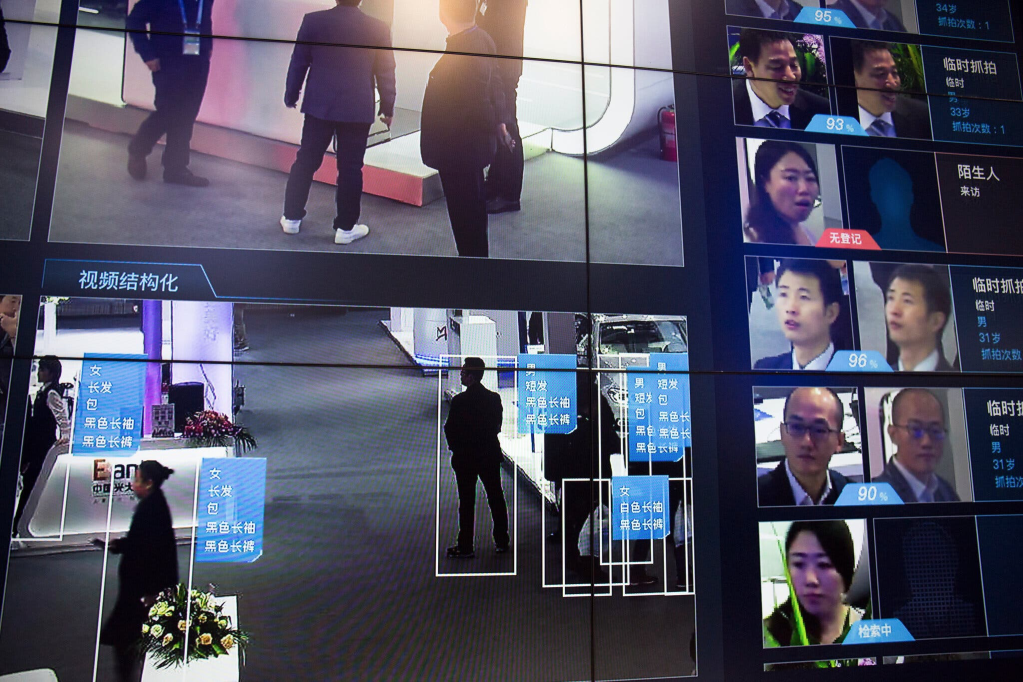
A decade later, and many are more concerned about their privacy being infringed upon then they are about saving time. Similar technologies have been recently misused in countries like China to control minorities. In the United States, the government employs this technology to help with policing, but many wonder if this feature is seamless enough to avoid problems such as mistaken arrests. The algorithm used to make this feature possible is called DeepFace and has yet to be sold to any third parties. Despite all of this, Meta has not promised they won’t use this software in future products.
Donald Trump is creating a new social media platform, called Truth Social, which he considers his newest endeavor to improve the United States. The article from NBC News focuses on the fact that it has potential to make millions of dollars and be a huge success, but at the same time, could flop and be a massive failure. Some major themes of the app will likely be promoting similar political messages from when Donald Trump was president, calling out other social media apps like Facebook and Twitter, and challenging big tech and media companies. The message being sent from the new platform is related to cancelling “cancel culture.” The app looks similar to Twitter and allows people to share a “Truth or Re-truth.” The plan is to make money through the social media platform, but Donald Trump has a history of failures in the business realm, which gives the impression that this platform could flop.
This is an interesting move by Trump and his team. It is very likely that almost all of the users on this social media platform will be supporters of the former president, which means that there will not be much political diversity. A large aspect of this platform will be people praising Trump and there will not be much pushback because many people who do not support him will not have interest in being on the platform, although there will be a few. Personally, it will be interesting to hear what happens on the app through other news stories or social media apps, but I do not plan on making an account because I do not enjoy debating on topic’s I am not extremely invested in.
Garfield is coming back to the silver screen courtesy of Alcon Entertainment which is helmed by Andrew Kosove and Broderick Johnson. This film is set to be released worldwide with the notable exception of China by Sony pictures. The script was penned by David Reynolds the Oscar-nominated writer behind the Pixar classic Finding Nemo. The film is being directed by Mark Dindal who has previously directed the Disney film Chicken Little. These two creatives have also notably worked alongside each other in the past on the Disney film The Emperor’s New Groove.
Garfield is an orange tabby cat owned by John Arbuckle and who shares his home with a dog named Odie. Garfield is characterized as being lazy and mischievous. Garfield was created by Jim Davis and made his debut as a comic character in 41 newspapers in 1978. Since then the comic that bears his name has become the most widely syndicated comic in the world.
Alcon acquired the rights to the Garfield intellectual property from Jim Davis to make this project possible. Davis will serve as an executive producer alongside Bridget McMeel and Craig Sost. The film will be produced by John Cohen, Steven P. Wegner, Kosove, and Johnson. The Animation studio DNEG Animation who recently worked on the film Ron’s Gone Wrong will produce and animate this film.
The producers of this film will be DNEG CEO Namit Malhotra and president Tom Jacomb. Garfield has made his way onto the big screen twice before. The features in question are 2004’s “Garfield” and 2006’s “Garfield: A Tail of Two Kitties” both of which are live-action animated hybrid films. These films were both, one, produced by 20th Century Fox and two, included Bill Murray as the voice of the titular cat.
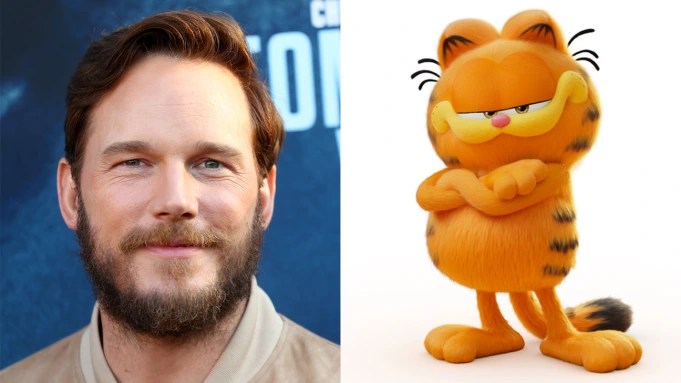
Voicing Garfield this time around is Chris Pratt. Chris Pratt has become well known for his voice acting in recent years being prominently featured in the Lego Movie franchise, Pixar’s Onward, and the yet to be released Super Mario Bros. animated film from Nintendo and Universal.
This article interests me for four main reasons. For one, I’m very interested in the Animation studio DNGE. This because this will only be their second major project. As of now DNGE is most notable for having risen into the spotlight after the closure of the prolific American animation house Blue Sky Studios. Secondly, I’m interested to see how the film in question will go about expanding the Garfield brand. Garfield has had something of a renaissance in recently spawning an online horror based fan community and even being set to appear in the recently released fighting game Nickelodeon Allstars. Thirdly , this article interests me because I’m interested in the cultural ramifications of having Chris Pratt play 2 of the most well known characters of all time in Mario and Garfield. Lastly, It’s just mentioned in passing, but i’m very curious what aspect of this presumably family friendly film has made the creators decide not to release it in China.
Recent comments by singer Katy Perry, about singer Adele and her new project 30 (debut November 19th) sparked a popular topic in the music industry. Perry’s comments stated “Adele drops new music when everyone is vulnerable and sensitive” typically during the Autumn seasons. She says it in a joking tone, indicating that she is excited to hear this new music. But acknowledges a tactic that labels and music artists use to generate the most traffic to their projects. Adele being a highly anticipated artist, understands her influence on the music industry and her fans. She releases heartfelt ballads that are praised but often associated with love and sorrow. Katy Perry being more of an upbeat pop artist, she joked that other artists release music when they know the world is about to be “sad”.
Other artists like Drake have been associated with promoting his music by thriving on his fan’s highs and lows. Since debuting his first studio project Comeback Season Drake was associated with jokes like “don’t drake and drive” or “Drake is so sensitive and lonely, always longing for a woman”. His Toronto sound became a staple in the music industry because of his reminiscent lyrics and personal life. This age of celebrities shares so much of their lives with their fans. Drake’s been romantically associated with women such as Serena Williams, Rihanna, Jorja Smith, Jennifer Lopez, etc. Drake acknowledges his failed romances, childhood traumas, and feuds in his music. His fan’s connection and opinion towards his romantic relationships, somehow correspond with his album/streaming success. A pattern shown in Drake’s release dates shows that he thrives on his fan’s highs and lows: releasing music strategically in the colder seasons and summertime.
Perry emphasized in her comment that Adele’s songs alone don’t keep the fans anticipated. It’s the fact that Adele releases her music during the colder seasons, when there is a rise in seasonal depression. Another artist associated with his industry strategy is the singer Kehlani. In a recent interview with Power 105.1 The Breakfast Club radio show, she expressed her appreciation for fans that support her music. She then described a common theme in reaction to her music, saying “my fans love when I’m heart-broken”. Implying that she releases more “fire” music when she’s dealing with emotional trauma. Now that her fans hear more “self love and happy songs”, they still admire it, but it gives them a different feel.
To name one more artist whose name is associated with heartbreak, strategic release dates, and close connection to fans is Summer Walker. Without getting too deep into her personal life, Summer Walker is an R&B singer who debuted her first EP in 2019 and first album the same year. Walker has been associated with her now ex-boyfriend, producer London on da Track. This up and down relationship led to him producing her first studio album, along with causing a great amount of heartbreak for the two of them. Because Walker uses social networking sites to connect with her fans, they got a front-row seat to the madness. Since their break-up, Walker announced her new album to be released November 5th, not produced by London. Her fans are excited for her music because they thrive on her heartbreak songs that just so happen to be released when “everyone is most vulnerable” like Perry says. Is it true heartbreak and seasonal depression bring album sales?
“Due to a work error, the first draft of the new Game’s Victory show – which was shot down before – was mistakenly used in promotional activities at a trade fair,”
This statement which was written on the Chinese Twitter equivalent “Weibo” was posted alongside a notably distinct poster design for their newly re-titled program “Game’s Victory”. These steps however have done little to quell online outrage.
“It sounds like such a lame cover-up. Obviously, they had tried to rip off Squid Game because of how popular it is,” another Weibo user posted.
This debacle has brought up the fact that many Asian citizens are “fed up” with how often Chinese producers plagiarize Korean content. Netizens cite the similarities between the South Korean program “Show me the money” and the similar Chinese program “The Rap Of China” as being a particularly egregious example of this trend as well.
“Why can’t our producers come up with our own ideas? This is so embarrassing,” another poster on Weibo commented.
This all comes as a result of Squid Game’s becoming a nationwide phenomenon in China despite its not officially being released there. As Netflix is not available in China the show has gained a following exclusively through illegal means such as torrenting sites. Youku being one of China’s most popular streaming platforms with between 90 and 100 million active users decided capitalizing on Squid Game’s situation was potentially very profitable. This controversy comes on the heels of a multitude of similar culturally-based arguments that China and Korea have taken part in in recent years. Last year for instance Korea accused China of “stealing culture” when the country stated it “led the kimchi industry”. This controversy was born of The language barrier between the two countries. In China, kimchi is called “pao cai” – this being the same name as a Chinese pickled dish. China was also criticised for stating that the Korean national dress handbook originated there.
To answer the question posed by the title of this article “no”. I’m writing this article because I firmly hold that opinion. I don’t think taking surface-level elements from a popular television program and incorporating them into a show of a completely different genre is as bad as it’s being made out to be. To be clear, I’m glad that the name “Squid Victory” and the poster that represents the centre of the controversy were changed because they were deliberately misleading. I would however like to call into question why the Chinese and Korean governments are bickering like children about cultural stuff? Lastly, I beg the question, who cares if some Chinese body makes a rip off of a game show or of a drama that can’t legally be accessed in China? If said shows aren’t good enough to stand on their own merits won’t they just be cancelled anyway? Is mimicry not the greatest form of flattery?
In these past couple weeks after whistleblower, Frances Haugen, testified before congress regarding how Facebook’s algorithm has been feeding harmful content and misinformation to the masses, the topic of how social media perpetuates eating disorder-related content has reached the mainstream. Internal documents revealed how Instagram’s algorithm has perpetuated content that is normally associated with the more toxic realm of body, weight, and health related material. This has resulted in “proana” (short for pro-anorexia) as well as other disorder eating related content being exposed to users. This has been incredibly problematic for younger demographics whose sense of self and esteem are so vulnerable.
For many people reading this, this is old news. Content that glamorizes eating disorders have been prevalent on social media platforms long before the birth of Facebook and Instagram. Myspace and Tumblr were especially notorious hotbeds for all things “thinspiration” in the early to mid-2010s. As the years went on, tech companies have been more proactive in taking down profiles and posts that included any keywords associated with eating disorders, while subsequently making sure that anyone who searched up these terms was given direct access to helplines and psychiatric support. Facebook has been slammed in the last month with outrage from a public demanding to know why these algorithms would continue to promote content so dangerous to young people. Is it a shameless cash-grab within the weight loss industry? A miscalculation in a technical code? How could they let this continue to happen? Well, while those questions are still valid to ask, its important to note that identifying harmful content is not as simple as it may seem. In a New York Times article, authors Kate Conger, Kellen Browning and Erin Woo referenced an important quote about this topic:
“Social media in general does not cause an eating disorder. However, it can contribute to an eating disorder,” said Chelsea Kronengold, a spokeswoman for the National Eating Disorders Association. “There are certain posts and certain content that may trigger one person and not another person. From the social media platform’s perspective, how do you moderate that gray area content?”
From an outsider’s perspective, it may be easy to look at one profile and categorize it as “harmful” while viewing another as “health-related”. However, that perspective can differ drastically depending on the individual. There is a plethora of content that was never intended to be viewed as “proana”, but, unfortunately, is worshipped that way. Think models, influencers, or fitness gurus. How is an algorithm meant to understand what reaction a user will gauge? It becomes even more difficult when we look at how many people use social media as a place to tell their story about their eating disorder recovery. One of the most beautiful aspects of the modern age is how we can use these platforms to connect with other people who are struggling and offer them support. Unfortunately, like influencers, accounts meant to promote recovery can also be viewed in a toxic mentality that further perpetuates disordered thinking. Is Instagram supposed to shut down these survivors’ accounts as well? The accounts that really perpetuate these toxic ideologies are often hard for social media to identify; the hashtags will normally be one letter off from the keyword that would get them shut down, while any wording in posts is carefully crafted as to avoid them as well.
Instagram and Facebook have made a lot of progress in taking these accounts down compared to the past. However, these new reports have also exposed the flaws in their system. They are not without fault, but it is important to remember how difficult paroling this type of evading is on a scale of over a billion users. No one (not just girls) should be exposed to accounts that promote EDs, but for those who wish to seek it out, can always find a way to hide in the shadows. It will be interesting to see how Facebook address this situation, and whether or not they will make changes in their technology and AI to more accurately identify the nature of these accounts. Though, they may want to consider that the best course of action, for vulnerable people to truly avoid coming across these triggers to their mental health, is to denounce their platform; to not assume that everything can be fixed from within, and for once, just suggest that their platform is not suitable for some people to use.
Famous comedian, Dave Chappelle, is no stranger to controversy. In fact, it’s to be expected, at this point, for any new stand up special of his to be met with a certain amount of blowback. It has been nearly been two weeks since the release of his new Netflix special, The Closer, and it has already climbed in viewership, currently making it Netflix’s most popular release just below Squid Game.
In the special, Chappelle talks about a variety of controversial issues, but primarily talks about his experience and perspective on the LGBTQ community. To report that his entire rhetoric was an offensive attack would be inaccurate as well as subjective. It is true that he makes a variety of jokes that would be considered taboo in our Western society’s vision of political correctness compliance. However, every joke is accompanied by a message of empathy; in his special, Chappelle stresses the importance of having compassion for your fellow human, and how as a black man, can relate to the struggle of minority groups including the trans community that he pokes fun at. At the end of the special he addresses the LGBTQ community: “I am not telling another joke about you until I am sure that we are both laughing together.”
(Pictured left: Ted Sarandos/ Left: Dave Chappelle) Image courtesy of variety.com/
Whether or not you agree with his message, or consider his comedy valid is completely up to you as the viewer. Comedy, like all forms of art, is subjective. However, many viewers, media outlets, and employees within Netflix found The Closer to not only be of poor taste, but harmful to the progress of the LGBTQ community. As a result, Netflix CEO, Ted Sarandos, put out a memo to his staff, acquired by Variety that read, “you should be aware that some talent may join third parties in asking us to remove the show in the coming days, which we are not going to do.” The memo continued, “As with our other talent, we work hard to support their creative freedom—even though this means there will always be content on Netflix some people believe is harmful.”
While the notion of creative freedom, as well as first amendment rights are typically supported by the general public, the blowback from people who found the Closer offensive, site Netflix allowing Chappelle such a large reaching platform to express these ideologies as the main problem. In a Wired article, Angela Watercutter, stated “The reason a show like The Closer can grab as much attention as a show like Squid Game is simple: People sometimes like content that is harmful to others. Thousands, if not millions, will vote for anti-LGBTQ candidates, and the same amount of them will watch content with similar viewpoints.”
The comparison of The Closer to Squid Game is interesting; sure, they’re both surging in popularity on Netflix, but does that really mean that we’re only watching them to fulfil a desire to see harm come to others? If this was the case, why is there no call to pull the South Korean TV show from the platform? Many would argue that, with Squid Game, there is so much more to flesh out from the narrative and characters; a variety of social political commentary that shines a light on corporate corruption that lives between the lines of these characters’ partaking in gory children’s games. The same could be argued about Dave Chappelle’s special: That within the jokes regarding the LGBTQ community, people of color, women, white people, law enforcement, and all the other people he joked about (including himself in the acknowledgement of his own privilege) there is an accompanying message of unity, humility, harmony, and humanity.
Since August 31st, 2021 Hong Kong/Beijing China announced the new ban for online gaming in reference to children 18 and under. On weekdays the children will limit their play to just three hours. This new ban went into affect this past Monday and was announced by China’s National Press and Publication Administration. The restrictions were specific as ‘people under 18 will be allowed to play video games one hour a day between 8pm and 9pm, mostly on weekends or nationally celebrated holidays’.
This is a huge blow to the gaming industry in China that rely on loyal players and subscribers. But is this an attempt to regulate children’s exposure to “specific types of video games?”. On the other hand, is this an attempt to regulate children’s media exposure as a whole in China? In 2021 there over 110 million minors playing video games in China. It’s expected that this number will decline due to the reduction in time they’re allowed to play, which will also influence money spent by these players under 18. https://www.cnn.com/2021/08/31/tech/china-ban-video-games-minor-intl-hnk/index.html
In 2019, there were limits restricting play to 90 minutes a week for children. Authorities state that these new restrictions were created to attempt to prevent young people from becoming addicted to video/online games. They also stated that placing these specific restrictions will protect the healthy growth of minors in China. In reaction to this, investors such as NetEase (NTES) declined 3.4% during trading hours in New York Monday the 27th.
This may also impact the industry of eSports in China. Its the international gaming competition (Olympics) for online video gamers. If minors are limited to the amount of hours they are allowed to play, the momentum for this event could die down, impacting China’s economy. On the other hand, they are paying close attention to the potential behavior changes for children/adolescents after exposure to these games. Attempting to get ahead of the “problem” they see for their citizens. Will Chinese kids find a way around this restriction? And play video games as normal? What does the enforcement of these new restrictions look like?
” There are over 110 million minors that play video games in China today, and we expect the new limits to lead to a decline in the number of players…”
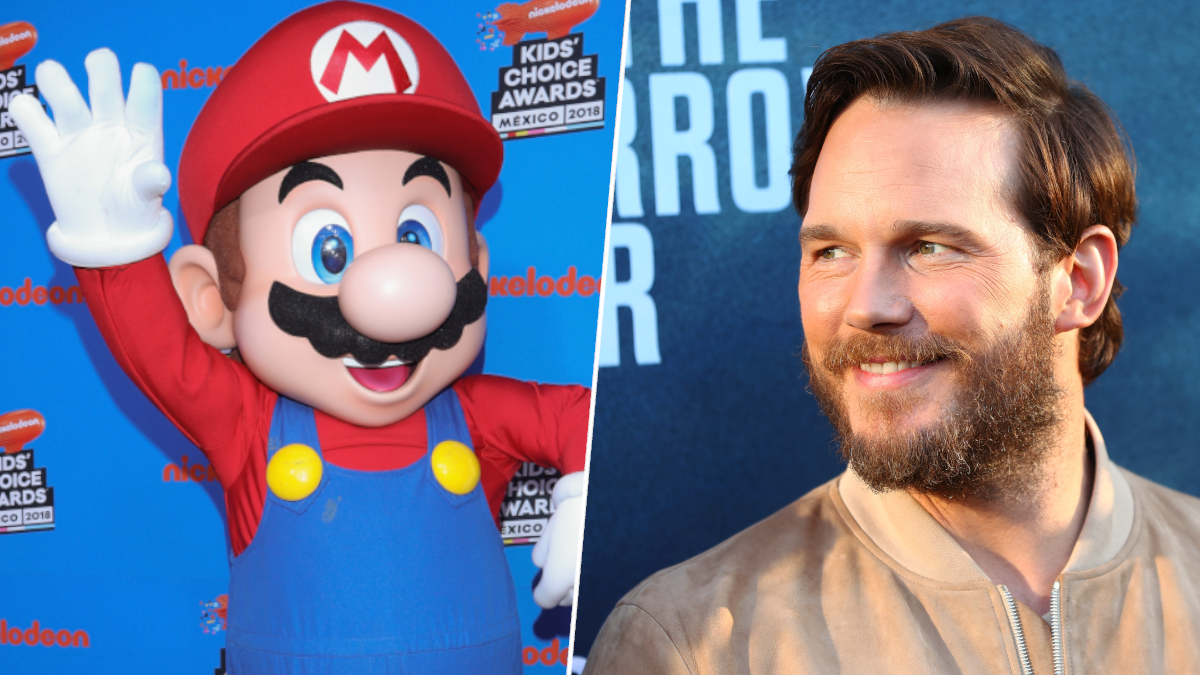
Star of 1993’s cult classic loose adaptation of the Super Mario Brothers property John Leguizamo recently expressed disapproval for the upcoming animated Super Mario Brothers film (Dick, 2021). The film in question is slated for release on December 21st of 2022. Leguizamo’s disapproval comes as a result of the notable absence of Latinx lead actors in the recently revealed voice acting lineup. The cast includes: Chris Prat as Mario, Charlie Day as Luigi, Anya Taylor-Joy as Peach, Jack Black as Bowser, Keegan-Michael Key as Toad, Seth Rogen as Donkey Kong, Kevin Michael Richardson as Kamek, Fred Armisen as Cranky Kong, and Sebastian Maniscalco as Spike. Veteran Mario voice actor Charles Martinet will also be in the film as unspecified cameos. About this matter, the former Luigi actor posted a tweet stating:
“So glad #superMariobros is getting a reboot!” Leguizamo says in the tweet. “Obviously it’s iconic enuff. But too bad they went all white! No Latinx in the leads! Groundbreaking color-blind casting in original! Plus I’m the only one who knows how to make this movie work script wise!”
The 1993 Mario Film was directed by Rocky Morton and Annabel Jenkle. The film was written by Parker Bennett, Tery Runte, and Ed Solomon. Bob Hoskins played Mario in this adaptation, Dennis Hopper played King Koopa, Samantha Mathis Played Princess Daisy, and Frank Welker played Yoshi.
Chris Prat made a point of noting just how excited he is to play Mario stating “dreams really do come true” on Instagram. Prat then recounted a time during his youth when he used to steal coins from a wishing well and use them to play Mario. This was followed by Prat’s stating:
“It just dawned on me right now. The quarter I stole out of the wishing well to play Super Mario Bros. has come true, that I get to be the voice of Mario. But, I clearly stole someone else’s wish, so, just waiting for that row of karma dominoes to come crashing down on me.”
I’m interested in the upcoming Mario film for the reason that the Mario intellectual property represents the best selling video game franchise of all time. Mario had approximately 620 million copies of his various games around the world as of January of 2020 (Adler, 2020). With this being the case I feel as though it is undeniable that this film will have a major cultural impact. Regarding the casting choices, while i’m not fond of the fact that the leads aren’t being played by Latinx people I am a big fan of all of the actors that have been chosen outside of that fact.
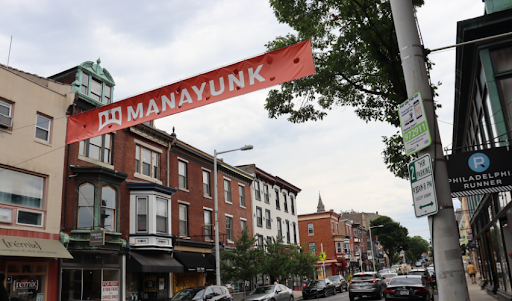
While Manayunk hosts the production of the new Sandler film, Hustle, rumors are beginning to circulate about whether or not the town will actually be referenced in the movie.
If you live in Northwest Philly, you’ve probably been hearing all about it: Adam Sandler is filming a movie in Manayunk! It has been the talk of the rowhouse town for weeks now. Happy Madison Productions, is telling the story of a basketball scout (portrayed by Sandler) attempting to revive his career by bringing an athlete from another country to play in the NBA. The film takes place in various parts of the city of brotherly love, but for the few days, production has been centered in Manayunk.
Many fans of the actor gathered on the streets at all hours trying to get a glance of the action, while other locals have not been as welcoming; Upset about how street closures have disrupted their day-to-day, a few petitions have even circulated around social media groups, including a call to have the production company “give back” for causing inconvenience. Though, as the filming wrapped up Friday evening, the community seemed in good spirits. ABC6 caught Sandler taking the time to greet fans, and everyone is excited to see their Canal Neighborhood be featured on Netflix.
Friday morning, a cop at the intersection of Main Street & Shurs Lane reveled to me that he had been hearing rumors that state: “It’s not actually gonna be Manyunk. It’s supposed to be like ‘North-North’ Philly, but they’re just using parts of here that look more beat up”
“North-North” referring to areas such as Kensington or Northern Liberties. When I asked him why he thought they would make that decision, the cop said, “I think was just easier for them to do it here.” This notion remains completely alleged, the only evidence being anecdotal. However, it is not out of the realm of possibility; pretending some locations are others is a regular procedure in film. Though if true, it raises questions the money Manayunk received for hosting Happy Madison Productions, and if it should have been allocated to Kensington or NL. Furthermore, its sure to cause disappointment among the Manayunk locals who where excited to see their town in a Movie. Until further information is realized about the film, we’ll just have to wait until Hustle drops on Netflix later in 2021.





 Current Issues In Media Management