Facebook announces plans for how to ‘nudge’ teens away from harmful content

Image via The Verge

Facebook is planning to introduce new features to protect teenagers’ mental health, including measures prompting teens to take a break from Instagram, as well as features to nudge young people away from harmful content. In CNN’s State of the Union show on Sunday, Facebook vice president of global affairs Nick Clegg commented: “We’re going to introduce something which I think will make a considerable difference, which is where our systems see that a teenager is looking at the same content over and over again, and it’s content which may not be conducive to their well being, we will nudge them to look at other content”. Moreover, he added Facebook is pausing its plans for an Instagram Kids platform, which was also strongly criticized.

“We cannot, with a wave of the wand, make everyone’s life perfect. What we can do is improve our products, so that our products are as safe and as enjoyable to use.”

Nick Clegg, Facebook vice president of global affairs

The announcement comes less than a week after whistleblower Frances Haugen accused the company of failing to improve Instagram after internal research confirmed that the social media app negatively affects the mental health of young people. Clegg explained that Facebook has invested $13 billion in the last years to keep the platform safe. However, he also noted: “We need greater transparency,” and that Facebook’s algorithms “should be held to account, if necessary, by regulation so that people can match what our systems say they’re supposed to do from what actually happens.”

It is very interesting to observe how Facebook is defending its strategy in this ongoing debate. The social media company is one of the most powerful forces in our times and therefore influences people’s daily life worldwide. Therefore, this debate is not only about Facebook’s repetition, but also determines how people, and in particular teenagers, are going to consume and use social media in the future.
Facebook Outage On Top of Current Backlash

Zuckerberg Loses $5.9 Billion In A Day As Facebook Faces Rare Outage,  Whisteblower Testimony
Image: Forbes

Facebook, Instagram, and WhatsApp were a few of the Facebook family apps rendered inaccessible on Monday for over five hours. This completely shifted the social media sphere for the day, as billions use Facebook and its apps. This is the largest outage the platform has had since 2008.

Facebook’s apps first started to display error messages around 11:40am Eastern time, according to the New York Times. The apps struggled to load content, some not displaying anything at all. It wasn’t until after 6:00pm Eastern time when the apps’ features slowly started to work, one by one.

This outage affected more than just Facebook and its apps, as many use Facebook as a sign-in feature on many websites and devices. Many rushed to other apps, like Twitter and Snapchat, who then experienced some issues from overloaded servers.

Facebook issued an apology using its competitor’s platform, Twitter.

Many on social media noted the interesting timing of this outage. It happened only a day after whistleblower, Frances Haugen exposed how the company consistently chooses its own interests over the public good. Haugen appeared on “60 Minutes” on Sunday to discuss her knowledge on Facebook’s effect on young users.

As usual, social media users rushed to Twitter to voice their feelings about the inconvenience throughout the entirety of the 5-hour outage.

Even Twitter itself decided to join on the fun.

Facebook has had its fair share of issues this past few weeks due to legal troubles, Haugen’s statement, and now the massive server outage. More is to come as Haugen is set to testify before Congress sometime this week.

Facebook Just Invested 5.3 Billion Into An Indian Company–It’s Largest Investment To Date

Yesterday, Facebook made its largest single investment into Jio Platforms of India which was a huge bet on the developing company.

Because Facebook wants to appeal more to the Indian audience, they felt the investment was essential, especially since over the past four years, more than 388 million people in India have been connected to the internet.

Mark Zuckerberg spoke on this in a Facebook post saying,

The country is in the middle of a major digital transformation, and organizations like Jio have played a big part in getting hundreds of millions of Indian people and small businesses online…With communities around the world in lockdown, many of these entrepreneurs need digital tools they can rely on to find and communicate with customers and grow their businesses.

Jio Platforms itself is a subsidiary of Reliance Industries (which is one of India’s biggest multinational companies and a major provider of cellular and internet services in the country,) therefore, the investment proves to be something that will propel the company forward and will ultimately help the Indian people to stay connected through the internet.

Although the Coronavirus pandemic has created a very fragile time for large tech companies when it comes to moving forward with investments, Facebook felt that taking a risk with Jio Platforms was necessary during this time and wants to display perseverance during this difficult period.

With this deal, Facebook will incur a 9.9 percent stake in Jio Platforms, and the respective money from Facebook will help Reliance to reduce some of their debt and invest further into its network (which it needs to do after regulators delayed approval of a high-profile $15 billion deal to sell 25 percent of its energy business to the Saudis.)

Source: https://www.nytimes.com/2020/04/21/technology/facebook-jio-india.html


Facebook faces potential $529B fine, By Australia over Cambridge Analytica

An Australian watch dog is suing Facebook over the Cambridge Analytica data breach in 2018. An Australian privacy act set out a provision for penalties up to 1.7 million to be levied per infraction. It is believed that there were 311, 074 local Facebook users who’s data was in the cache of 86 million profiles lifted by Cambridge Analytica.

The Office of Australian Information Commissioner (OAIC) has logged proceeding against Facebook in federal court for the companies repeated privacy interference. Facebook allegedly disclosed personal information to an application called, this is your digital life. This application used user data for purposes other than what the data was collected for. In doing so Facebook breaches an Australian privacy act from 1988. The creator of the app “GSR” was hired by Cambridge Analytica to obtain and process Facebook users’ data for politically targeted ads.

User data was syphoned off from March 2014 to May 2015 by GSR. Under contract with Cambridge Analytica they were working on United States political campaigns of Ted Cruz and later President Trump. Facebook failed to take responsible steps to protect its individuals’ personal information from unauthorized disclosure. Along with the fines, Australian and international regulators want to restrict information available to app developers. Which would imply new protocols for social media. This case is currently before the Federal Court.

Mark Zuckerberg wants regulation! Yay?

According to experts, this might not mean what you think it means.

This past weekend, Mark Zuckerberg visited Europe to show his support for regulation. Yes. That’s right. This is great news right? Unfortunately, no. This doesn’t mean that Zuckerberg had a change of heart. According to experts, the “regulation” Zuckerberg asks for is his definition of regulation. They say that he continues to avoid responsibility for the bad and damaging content on his platform, all while making sure the regulations approved are “toothless”.

The Facebook CEO dismissed all the evidenced claims about his platform contributing to political polarization, among other things, at the Munich Security Conference last Saturday. He argued that the social media platform should be regulated like something in between a newspaper and a telecommunications company, while acknowledging that it would simply be impossible to keep up with the insane amount of content posted everyday – the amount is in the billions.

Later Sunday, the Financial Times published an interview with Mark Zuckerberg where he expanded his willingness to welcome regulation. He had stated before that the areas for which he mostly supports state regulation are “elections, political discourse, privacy, and data portability.” In the op-ed piece, he told FT “I believe good regulation may hurt Facebook’s business in the near term but it will be better for everyone, including us, over the long term.” He later added “to be clear, this isn’t about passing off responsibility.”

After this, experts and academics continued to criticize Zuckerberg for his “hypocritical” stance and Facebook’s overall lack of accountability for many issues such as the rise of extremist groups who use Facebook to nurture hate speech. They come to this conclusion because there has been a significant investment in lobbying efforts from Facebook towards the lawmakers involved in the development of Europe’s Digital Services Act, a law that intends to regulate the internet.

As future media professionals, this is obviously something to follow closely; but it’s also important to analyze on a deeper level how an American company (in this case Facebook) has become so powerful, it aims to control or seriously influence the decisions of other countries.

Source: https://www.vice.com/en_us/article/884mqp/mark-zuckerberg-is-literally-begging-europe-to-regulate-facebook-it-will-be-better-for-everyone

Facebook to limit ads in 2020

Image result for facebook ads

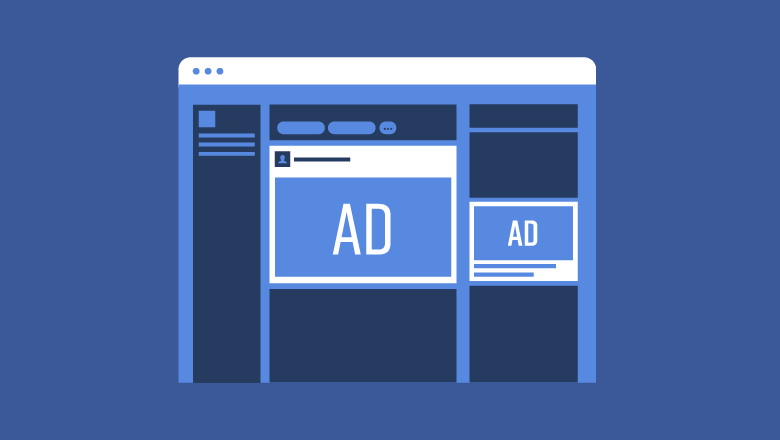
Facebook has recently announced that in 2020 they will start to limit the amount of advertisements a page can release on their site. A crazy idea that Facebook would turn down potential ad revenue and limit advertisers may not seem like such a crazy idea. Coming with the announcement Facebook said that only a small percent of advertisers and companies will be affected by this change. But when asked about why they are starting to limit the amount of ads they are allowing on their site they responded with “quality”.

Facebook plans to increase the quality of the advertisements by limiting the amount of ads a company can run. When a company can run as many ads as they want they produce low quality, potentially dangerous ads that do not serve the public’s best interest. And more importantly running too many ads leads to overall worse “ad performance”. Flooding the market with low quality ads takes away from the high quality ads and tarnishes Facebook’s ads results. When Facebook’s ad results get tarnished it lowers the price per ads and hurts Facebook in the long run. 

One of the latest ways Facebook has joined the movement to rid the platform of fake news. More and more media companies like Facebook and Twitter are starting to take a look at how their platforms are starting to affect the world outside of their platforms. Twitter not running political ads and Facebook limiting ads are ways these companies can keep a check on outside influence and interference with the American People.

Source: https://www.socialmediatoday.com/news/facebook-will-implement-limits-on-how-many-ads-a-page-can-run-in-2020/566605/