Apple acquires Classical Streaming Service Primephonic

Image Via Apple

Apple has bought the classical music streaming service Primephonic. The company announced in a release on August 30, by the acquisition “Apple Music Classical fans will get a dedicated experience with the best features of Primephonic, including better browsing and search capabilities by composer and by repertoire, detailed displays of classical music metadata, plus new features and benefits”. The acquisition adds more than 75 million songs to Apple Music’s library and Apple is planning to use Primephonic’s data about classical track to improve search capabilities and browsing. Moreover, Apple announced plans to launch a music app next year, which mainly focused on classical music and combines Primephonic’s classical user interface with more added features.  Primephonic said in a statement posted on Monday that in order to reach more classical music listeners worldwide they need to partner with a leading streaming service. The major shareholder of Primephonic Gordon P. Getty concludes “Primephonic and Apple together can realize that mission and take classical to a worldwide audience”. The acquisition is going to help serving classical music especially to those listeners, who listen to other music genres as well.

Primephonic is no longer available for new subscribers and will be taken offline beginning September 7. Current subscribers of Primephonic will receive six months of Apple Music for free.

In my opinion, the acquisition is an important step for Apple to expand its monopoly position in Media. In the last years, Apple acquired dozens of companies to improve expertise in particular areas. In the music area, some of the largest and highest profile acquisitions have been music service Beats for $3 billion in 2014 or Shazam, the music-identification service in 2017. By adding and promoting specific music genres, the company presents Apple Music as a multifaceted service, where every user can enjoy their unique taste in music. Moreover, with the addition of classical music, Apple tries to diversify their listeners, and convince the older audience in particular, to use Apple Music.

https://www.cnbc.com/2021/08/30/apple-buys-classical-music-streaming-service-primephonic.html

Spotify use During Pandemic has Soared

Spotify usage has completely been derailed from the usual statistics. Obviously, spotify usage in cars have dropped because of the Stay-at-Home order. But Spotify usage at home on T.V. or game consoles have soared, reaching an increase of over 50% of usual number.

From their data, Spotify has found that everyday usage seems like a weekend. In the mornings, people are constantly streaming music on the apps that would often only happen more on the weekends.

More Spotify usage has been happening around their family during cooking, chores, family time, and relaxing at home with their numbers doubling. Spotify descriptions such as “chill” or “instrumental” have also seen an increase. This is most likely because an ambient sound is looked for while performing activities with the family.

More US consumers are seen to be using music as a stress reliever according to surveys. Spotify is proud of the fact that they are able to continue providing service with little disruption during this time of chaos.

Opposite of Spotify usage in the US, Italy and Spain has seen a decrease in streams.

People cancelling their subscriptions have said there reason for cancelling was due to the pandemic. They were also said to have renew their subscriptions when economic balance is restored.

Spotify has reached 130 million paid subscriptions, which is above forecasted numbers. But ad-supported revenue has been below forecasted numbers as a result of Covid-19.

Spotify CEO Daniel Ek, said the company is in better position because the company relies less on revenue derived from advertisements.

Spotify has also began investing more into podcasts which has seen a tremendous leap this year, especially due to the Coronavirus.

https://www.cnn.com/2020/04/29/media/spotify-earnings/index.html

~Club Zoom is in effect~

During the current era of social distancing, we have seen many artists, musicians, and DJ’s bring their performances to video conferencing platforms such as Zoom in order to give fans and supporters concerts, or content, or share tricks of how to create or be creative when it comes to music or art, or whatever the topic may be. With everyone streaming something from their home, we are seeing new ways of doing things that are currently just not possible, nor are they safe. For instance, at the moment you can’t really go grab a drink at your favorite bar, but people are coming up with alternatives. 

We’ve heard of Zoom happy-hour with friends or family, but have you heard of a Zoom nightclub. Well, this article from Bloomberg Business says that they’re here, and no, they are not free. People are actually paying money to get into Virtual nightclubs on Saturday nights amidst the pandemic. The Zone, a 16 room virtual nightclub has been hosting people on the video conferencing app. A bouncer greets guests in the waiting room where they are inspected to make sure they have on the proper attire, as well as beverages in hand. The guests are then let into ‘dance rooms’, where there are different costume themes and a live-streamed DJ. Later, guests are invited to the ‘hot tub room’ where swimming attire is a requirement. 

I wanted to write about this because I found it to be an interesting idea/concept. Personally, I think it’s a bit ridiculous that people are paying real money to get into these virtual nightclubs. I could maybe understand if it was set up by a particular nightclub and how friends or people who frequent it are simply trying to support a business they do not want to see go under. Not everything can be streamed and have a virtual session be the same as the interactions people had in person, and dancing in your living room is not the same as dancing at the Borgata. I respect the idea behind it and see how it fulfills a current need for the frequenters of clubs and those who need the gratification of being ‘exclusive’, but I am very interested to see if this type of nightclubbing will last. 

https://www.bloomberg.com/news/articles/2020-04-14/virtual-nightlife-grows-past-dj-livestreams-to-paid-zoom-clubs

Apple Music Gives Back to Independent Labels Hit by Covid-19

Record labels are also being hit hard by the Coronavirus crisis.  Physical sales are essentially decimated.  Live events are not happening so licensing income from public performance plays and sync use has fallen.  Labels which participate in their artists’ live income are obviously seeing that revenue reduced to zero as well.

Many labels are also postponing album releases due to the fear of a soft marketplace.  Apple music will announce later today, they will be funding $50 million to independent labels and distributors who meet a minimum quarterly threshold of $10,000 in Apple Music earnings.  This means Apple Music is hoping these independent labels will pay their artists to keep things in operation during these hard times.

Apple has also seen a surge of subscribers since the beginning of this pandemic, despite streaming volumes on all audio services dipping.  This means the money is going more directly to independent labels for their license of music rights.

Company-wide, Apple has been trying to help those in in need.  Tim Cook, CEO of Apple announced he will be donating $20 million to mask production and shipping. 

Redbox Enters the Streaming Market

Redbox recently kicked off their brand new online streaming service this past month, joining an ever growing list of competing services in the market.  The article by Eli Blumenthal on Cnet dives into the rental chains latest endeavor called ‘Free Live TV’ which offers consumers as the name suggests, complimentary access to television shows and certain movies.  The article compared the new service to Amazon’s ‘IMDb TV’ which similarly offers free advertisement based content in favor of a traditional subscriptions model. The service comes after years of decline in the popularity of the companies traditional disk based rental service that are common among grocery stores and shopping malls.  The article makes a point of mentioning the serious lack of content currently offered on the platform which may explain why the service does not require users to make an account to access shows and movies.  

At the time of this article, the service is only accessible to limited test markets and the company has stated that the platform will be going live nationally soon.  The service has publicized its partnerships with channels such as ‘USA Today’ and ‘TMZ’. I find it odd that Redbox has launched their new service early in select markets despite the serious lack of content currently found on the platform; resulting in what appears to be rather lukewarm reception by users.  With the market already flooded with streaming services and showing no signs of slowing down, it’s interesting that Redbox has decided to throw their hat in the ring with almost nothing to differentiate their product from the rest. Perhaps there will be a market for a service like this as it is completely free at the moment which may entice people searching for streaming option that doesn’t require a subscription like Netflix and Disney Plus.  

https://www.cnet.com/news/redbox-expands-into-free-live-tv-and-movie-streaming/

Cancel Culture–Harmful or Effective in Holding Our Fellow Celebrities Accountable?

Cancellll

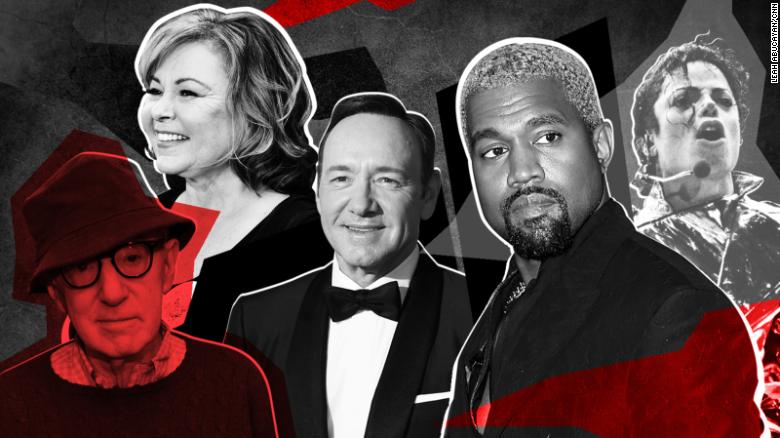
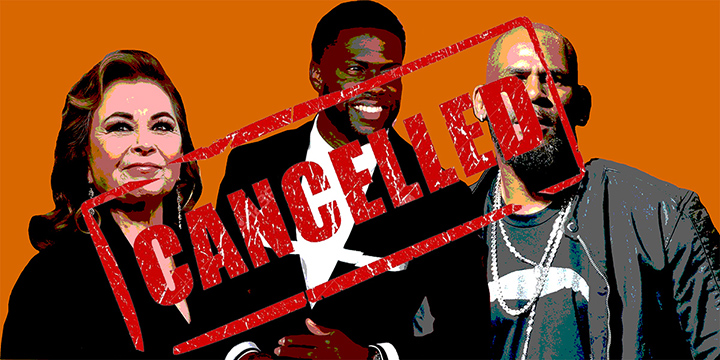
For those who aren’t as familiar with what cancel culture is, canceling and cancel culture have to do with the removal of support for public figures in response to their objectionable behavior or opinions (which can include boycotts or refusal to promote their work.)

In late 2018, comedian Kevin Hart publicly stated he would be hosting the 2019 Oscars; an announcement that triggered intense public scrutiny regarding homophobic jokes and tweets he had previously put forth. While the backlash against Hart came from many different directions, a majority derived from the social media platform, Twitter. Although ‘cancel culture’ is not a new phenomenon, it is evident that it was brought to the forefront of American pop culture after Hart’s “canceling,” and has continued since.

With this idea of “canceling” in mind, the question many have is whether or not canceling is harmful or effective in holding these celebrities and public figures accountable.

Last night during the Oscars, Joaquin Phoenix gave a discursive speech in which he both criticized “cancel” culture and advocated for social justice while accepting the Oscar for best actor for his performance in “The Joker.” In his speech he said,

“I have been a scoundrel all my life, I’ve been selfish. I’ve been cruel at times, hard to work with, and I’m grateful that so many of you in this room have given me a second chance,” Phoenix said. “I think that’s when we’re at our best: when we support each other. Not when we cancel each other out for our past mistakes, but when we help each other to grow. When we educate each other; when we guide each other to redemption.”

Like Joaquin, many believe that cancel culture is merely harmful to society and those individuals being “canceled,” but, according to the article on Daily Toreador, many also feel that it’s unfair that celebrities can seemingly “get away” with hurting other people or making damaging and harmful statements, even after being canceled for a little while. At the same time, however, it is both concerning and detrimental that as a society, we perpetuate a culture of simply canceling someone instead of encouraging them to be better and holding them accountable in a constructive way (similar to what Joaquin said.)

I think we can all agree that public outrage against celebrities is expected and sometimes even justified in some cases, but is it possible that sometimes cancel culture can go too far? What do you think?


Sources:

http://www.dailytoreador.com/opinion/opinion-what-another-hostless-oscars-says-about-cancel-culture/article_b66c13f6-4ba0-11ea-ae0d-9fe86d0364ea.html

Joaquin Phoenix Criticizes Cancel Culture in Oscars Acceptance Speech

They’ve Gotta Have Us

A new documentary series on Netflix has just been released yesterday. It takes a deep dive into understanding how African-Americans were portrayed in media entertainment. Ever since the #Oscarssowhite movement that took place around five years ago, anti-discriminatory notions have taken over social media. With African-Americans feeling they have not been properly acknowledged for their part in the movie entertainment industry, They’ve Gotta Have Us looks into how the perception of having people of color in films has changed.

This documentary series discusses the effects having African-American cast members had earlier in the movie industry. The idea that having people of color in movies would result in less sales and less popularity across seas is changing. Notable African-American films are having major success such as Moonlight’s and Get Out. These films have changed the script for African American producers dreaming to make it big in the film industry. (“The color the really care the most about is green.”, Don Cheadle) The film industry will really change for what the people want.

Another highlighted point of this documentary is that having African Americans in front of the camera is not enough. More recognition has to be made for the African Americans who are also excellent producers and writers. Essentially, the directors and producers are the ones who call the shots. They make the big decisions and in order for African American people to be shown true appreciation, the people behind the cameras need their recognition.

With the growing number of streaming services, more creators of any color will have the opportunity to put their work out there.

Source: https://www.cnn.com/2020/02/05/entertainment/theyve-gotta-have-us-black-movie-history/index.html

Netflix 2019 Fourth Quarter Review

The New York Times reports that Netflix recently acquired 420,000 new subscriptions to their streaming service in the last three months of 2019.  The company had hoped to gain around 600,000 new subscribers but fell short of their initial projections. Reed Hastings, Chief Executive Officer of the streaming juggernaut acknowledged that the recent launch of Disney Plus may be to blame for the slowed growth.  He cited the great lineup of content Disney is offering on their new service as a potential reason behind the missed projections. However, this is not to say that Netflix is in any way starting to slow down in its monumental domination of the streaming landscape; it just may have to share the limelight with Disney Plus to a certain degree.  Netflix still has a whopping sixty one million subscribers in the United States alone, making it by far the biggest streaming service available on the market. After the recent report of missed projections, Netflix’s stock still rose two percent. Ultimately, the company hopes to gain an additional thirty million subscriptions in the United States over the next few years.  

I found this article to be fascinating as it serves as a perfect example of Netflix’s staying power and ability to remain not only relevant; but the indisputable king of streaming services.  Even when the company misses their targeted projections, they still grow on the stock market which perfectly encapsulates investors faith in the company. It remains to be seen if Disney Plus and new streaming services such as NBC’s Peacock which launch in the coming months will take a chunk out of Netflix’s market share; however as of right now it is undeniable that Netflix remains top dog.  

How NBC’s Strategy For Their New Streaming Service, ‘Peacock’ Sets Them Apart From Other Streaming Services

Screen-Shot-2020-01-16-at-3.37.57-PM

NBC Universal has some exciting things coming this year, with the most notable being the official launch of their new streaming service ‘Peacock.’

For those who haven’t heard of ‘Peacock,’ it’s NBC’s new streaming service that is set to launch of July 15th, 2020. ‘Peacock’ was named after the logo of NBC and is an American over-the-top subscription video on demand streaming service.

The majority of us utilize streaming services such as Netflix, Amazon, and Hulu to stream originals on each platform or catch up on missed shows, but did you know that ‘Peacock’ offers something that those rival companies haven’t made available yet?

NBC Universal will offer 3 different tiers for ‘Peacock,’ with the first tier being free (it will make the majority of its money from advertisements,) the second tier offering more content and only some advertising for 4.99 a month, and the final tier that will be 9.99 a month with no advertising. Although this tier system differs from that of other streaming platforms, what really sets ‘Peacock’ apart from other platforms is the fact that they don’t want consumers cancelling cable–instead, they want Peacock to be a supplement product.

In saying this, NBC Universal plans to offer ‘Peacock’ Premium for no additional charge to cable subscribers because of the fact that they don’t want you canceling cable or replacing cable. It’s evident that streaming products do have the ability to replace the cable bundle, but NBC Universal’s strategy hedges this outcome by building something that could one day operate as the company’s primary source of content distribution while also marketing it as an add-on service that’s free to many people. If this happens, the question is whether NBC Universal can turn ‘Peacock’ into a vehicle that generates more revenue-per-user than the cable bundle for the same amount of subscribers — today (while keeping costs the same or lower).

Disney Plus Could Hit 60-90 Million Users Sooner Than Anticipated

According to Variety, Disney may hit their subscriber projections for their new streaming service much sooner then initially expected. The report comes after the recent November launch of Disney Plus that saw ten million subscribers join within a day of the services launch; shattering industry analyst expectations. Disney Plus is essentially Disney’s answer to services such as Netflix and Hulu that similarly offer video content that can be accessed for a monthly subscription fee. Disney recently threw it’s hat in the ring by launching their new service which will serve as the exclusive home for the companies original content as well as for the enormous catalog of films and television shows Disney has created in the past.

Despite the troubled launch that saw users unable to access the service, Disney Plus has proven it’s incredible appeal with it’s vast library of content and new original shows such as “The Mandalorian”. Initially expected to accrue around eight million memberships in its first few weeks; Disney plus blew past that number on day one and shows no sign of slowing down. Some projections predict Disney will hit its goal of having sixty to ninety million subscribers by 2024, two years earlier then anticipated. Some analysts remain skeptical however of Disney’s run-away success because they say a vast majority of the ten million initial subscribers could simply be users utilizing the free trial period offered by the company. Another factor that could play into the huge success of Disney Plus is Verizon offering to give some users a free year of the service to enjoy. Regardless of the initial hype around the new streaming platform, it remains to be seen if Disney can maintain the high interest in it’s newest financial endeavor.